FOR IMMEDIATE RELEASE
New capability helps product marketing teams connect upcoming releases to launch planning, field readiness, and market execution
- Segment8 launches GTM Roadmap, giving product marketing teams a release-centric planning workspace that connects upcoming features to go-to-market execution, with direct promotion into Launch Plans when a feature is ready for market.
- AI-assisted development and competitive pressure are accelerating software release cadences, increasing the need for product marketing teams to keep launch planning, field enablement, and messaging in step with product delivery.
- GTM Roadmap gives product marketing the view it needs: customer problem, business case, market timing, importance, impact, and confidence alongside delivery status.
- The module connects directly to Segment8 Launch Plans, creating a clearer Roadmap to Launch workflow inside the GTM Intelligence Platform.
MANCHESTER, UK, September 28, 2025 — Segment8, the GTM Intelligence Platform for revenue teams competing in active markets, today announced the launch of GTM Roadmap, a structured planning capability that allows product marketing teams to organise upcoming features into releases with quarter targets, prioritise by business impact, and promote roadmap items directly into launch plans when they are ready for market execution.
Product roadmaps usually live in engineering systems, planning documents, or executive decks. Jira, Linear, Notion, and roadmap slides all serve a purpose, but they rarely give product marketing the context needed to prepare the market, brief the field, and shape the commercial story around what is shipping.
That disconnect has become more costly as release cadences accelerate. AI-assisted engineering, better development tooling, and intensifying competitive pressure are pushing software teams to ship more frequently. Features that once took a quarter to deliver can now move from concept to release in weeks. The GTM motion often remains tied to slower planning cycles, manual handoffs, and scattered launch documents.
When product delivery moves faster than product marketing can prepare the market, new capabilities reach customers through release notes rather than a coordinated revenue motion. Sellers learn about features after customers ask about them. Competitive positioning lags behind the product. Launch plans become reactive. The product may ship, but the market does not receive a clear reason to care.
Segment8 GTM Roadmap gives product marketing managers a release-centric planning workspace designed for that coordination problem.
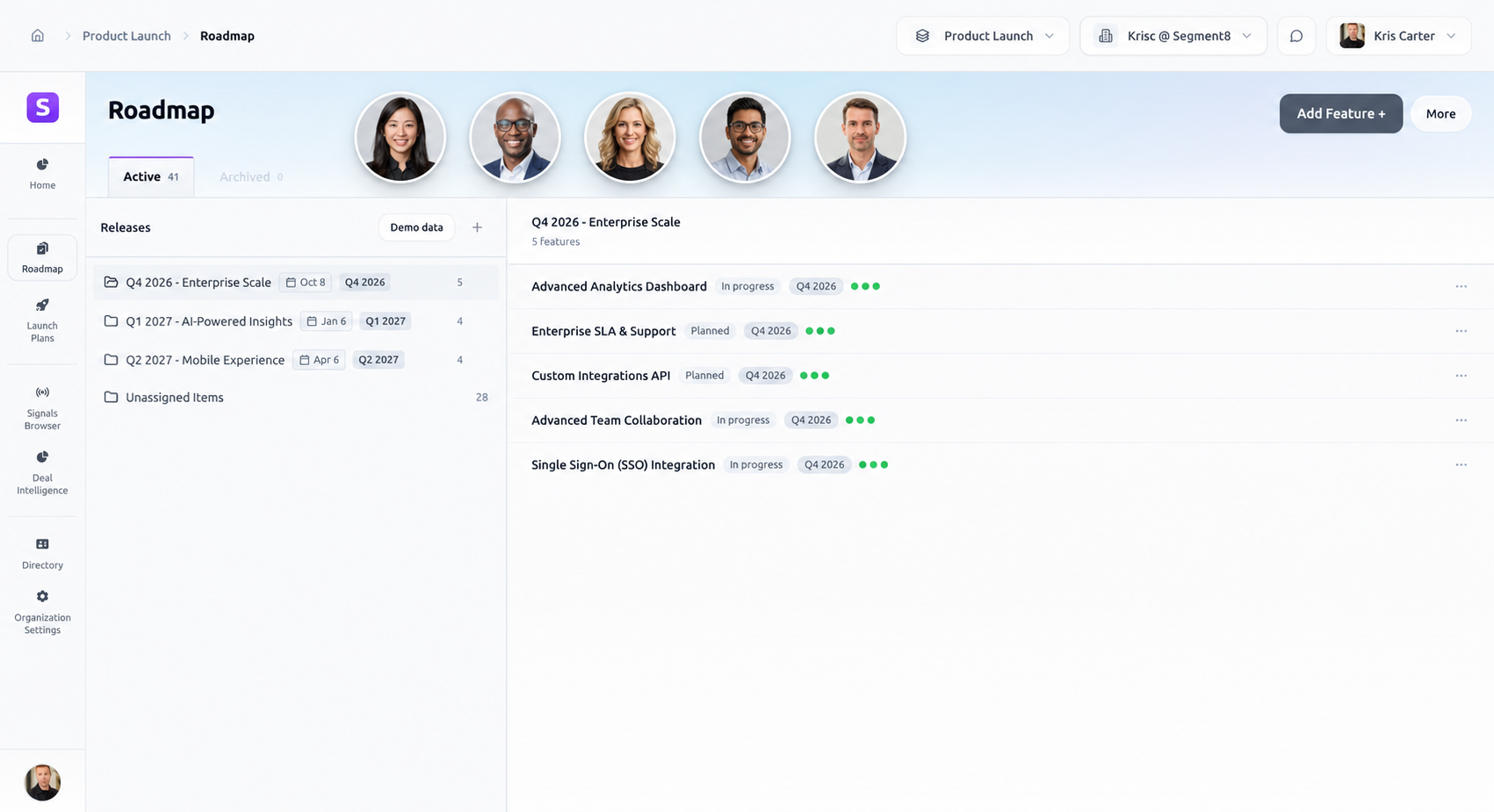
The module allows teams to organise upcoming features into named releases, assign quarter targets, set milestone dates, and track the GTM context that matters before a launch begins. Each roadmap item can include the customer problem, business case, importance score, impact score, confidence score, and market readiness notes. This gives PMMs a commercial layer on top of the product roadmap, focused on what the feature means for customers, sellers, positioning, and pipeline.
When a feature is ready for market execution, a single promotion action creates a launch plan pre-populated with roadmap context. Product marketing teams do not need to copy information from an engineering ticket into a separate launch document, rewrite the same background notes, or rebuild the commercial case from memory. The GTM rationale travels with the roadmap item.
"The product-to-market handoff has always been one of the hardest coordination problems in a B2B go-to-market team," said Kris Carter, Founder of Segment8. "I managed it at Procore during a period of rapid product expansion, and again at Featurespace, where the technical complexity made GTM timing especially consequential. Engineering kept getting faster: better tooling, better processes, shorter cycles. The go-to-market motion was still trying to absorb that pace through meetings, documents, and manual translation. AI is pushing that gap wider. The companies that compress the time between 'we shipped it' and 'the field knows what to say about it' are going to own the market narrative. GTM Roadmap is the infrastructure that helps make that possible."
GTM Roadmap is designed around the questions product marketing needs to answer before a launch. Which features deserve launch treatment? Which releases matter commercially? Which customer problem does each feature address? Which buyer or segment should care? What is the business case? How confident is the team in the market impact? Which items should move into launch planning now, and which should remain under watch?
That view is materially different from an engineering backlog. Engineering teams need to manage delivery, dependencies, resourcing, sequencing, and technical risk. Product marketing needs to understand market value, timing, narrative, enablement, competitive relevance, and field readiness. GTM Roadmap gives PMMs a dedicated workspace for that second layer without trying to replace the systems product and engineering teams already use.
The module also helps teams avoid two common launch failure modes. The first is over-launching: treating every feature as a major announcement and exhausting the field with noise. The second is under-launching: allowing meaningful product work to ship without the messaging, enablement, and sales guidance needed to turn it into revenue impact. By scoring roadmap items by importance, impact, and confidence, GTM Roadmap gives teams a clearer basis for deciding what deserves attention.
Starred items allow PMMs to surface priority work across the roadmap view, making it easier to keep high-impact features visible as planning evolves. Quarter targets and release groupings help teams see what is coming, where launch capacity may become constrained, and which items should be prepared together as part of a broader market story.
The direct integration with Segment8 Launch Plans completes the Roadmap to Launch workflow. Once a roadmap item is promoted, teams can plan the launch motion, define audiences, capture messaging, prepare sales enablement, organise tasks, and connect the launch to the wider GTM intelligence layer inside Segment8.
For product marketing teams, this creates a more controlled path from product planning to market execution. For product leaders, it gives visibility into how upcoming releases are being translated into commercial readiness. For sales leaders, it reduces the risk that the field discovers product changes too late to use them in customer conversations.
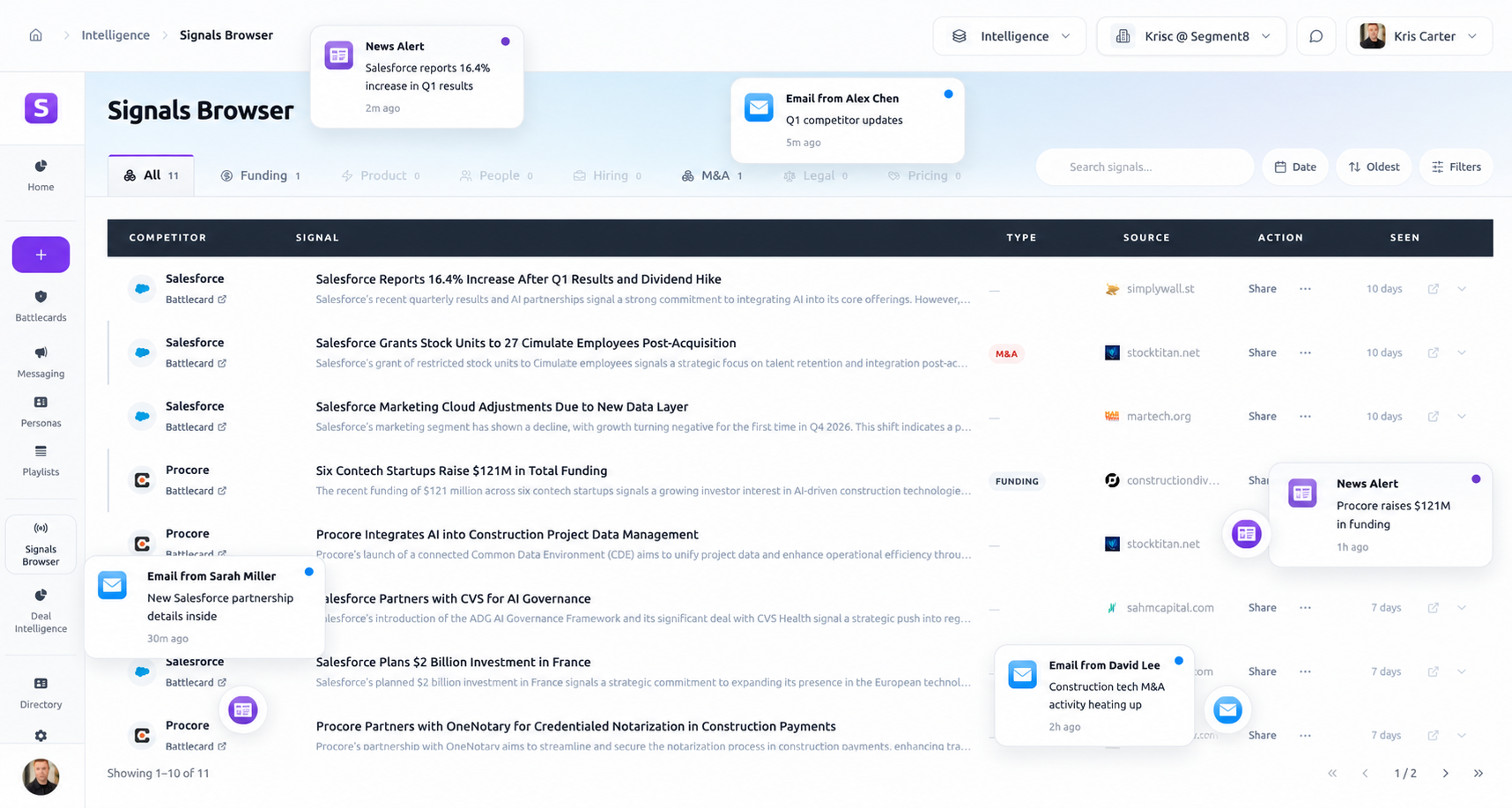
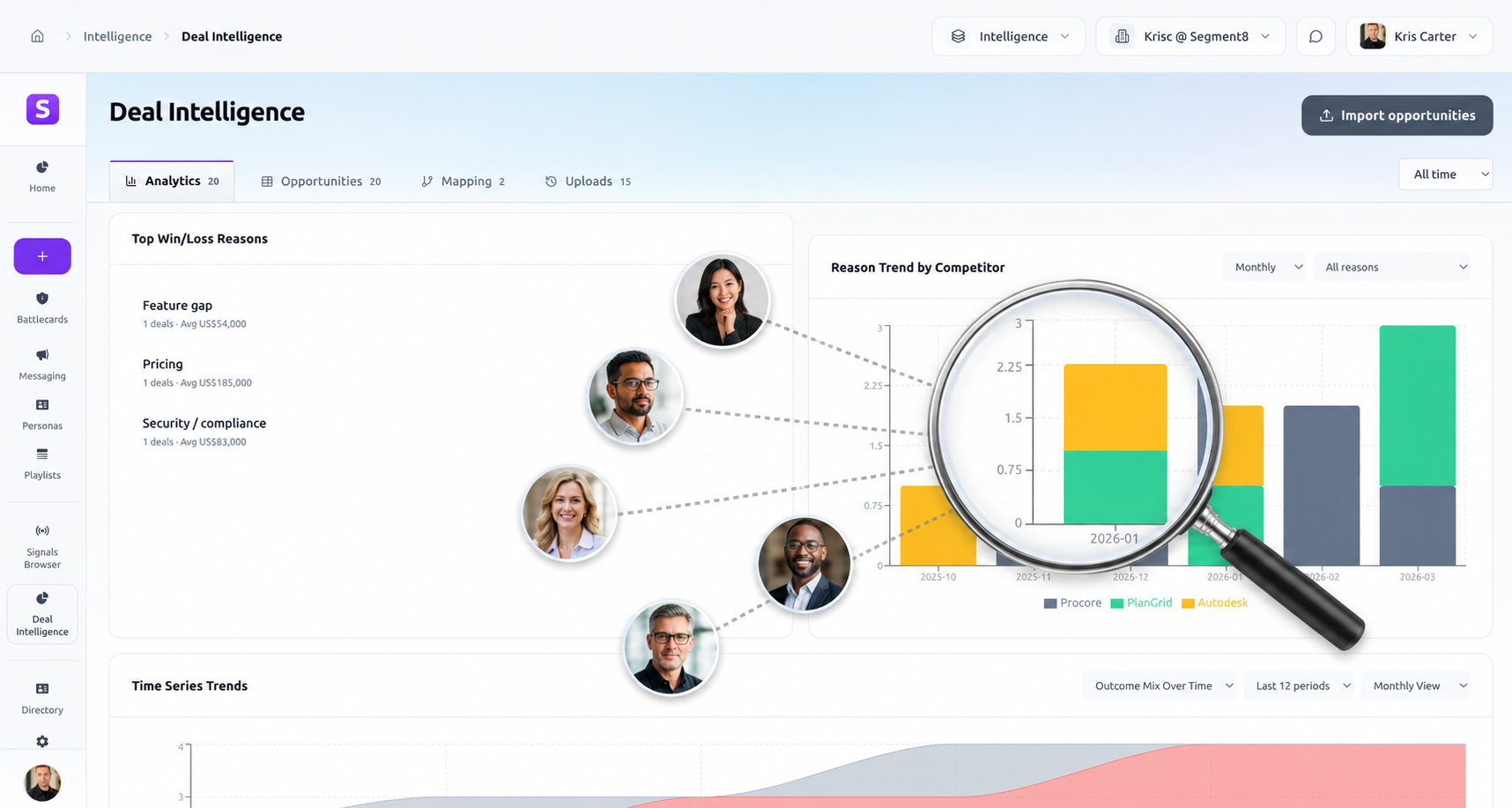
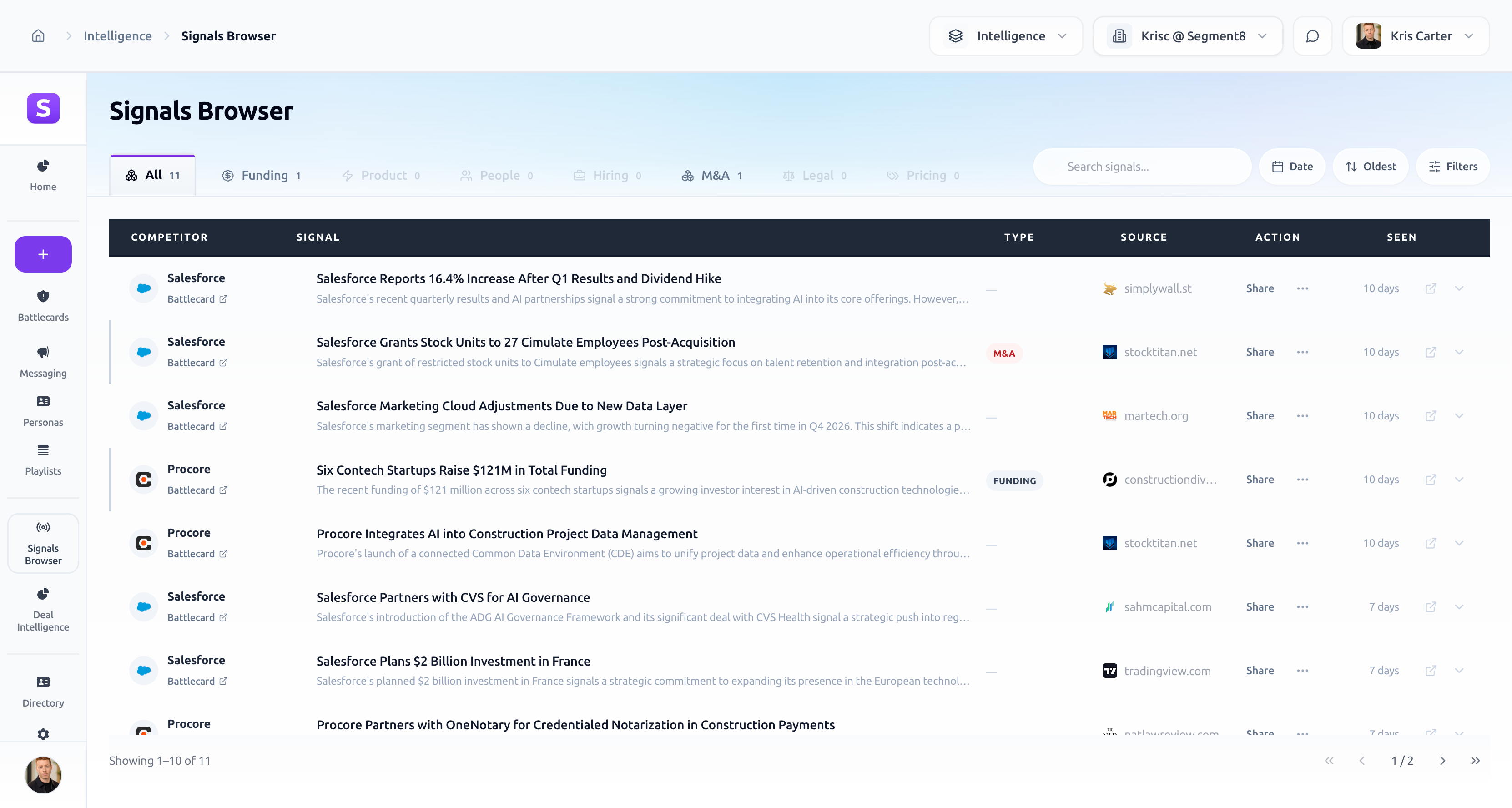
The launch also extends Segment8’s broader GTM Intelligence Platform. Market Signals help teams see competitor movement. Battlecards translate competitive context into field guidance. Deal Intelligence connects CRM outcomes to competitive strategy. GTM Roadmap adds the product planning layer, helping teams connect what they are building to how they compete, launch, and sell.
"Shipping is not the finish line," Carter added. "A feature only becomes commercially useful when the market understands it, the field can explain it, and the launch motion reaches the right audience. GTM Roadmap gives product marketing a clearer way to manage that journey from planned work to market impact."
GTM Roadmap is available to all Segment8 subscribers as part of the GTM Intelligence Platform.
Revenue teams can request a demo at segment8.com/demo.
About Segment8
Segment8 is the GTM Intelligence Platform for revenue teams competing in active markets. It connects market signals, win-loss intelligence, and field enablement in one platform so market intelligence reaches sellers before the deal is decided. Based in Manchester, UK.
Media contact
Kris Carter
Founder, Segment8
[email protected]