Keep one current view of every competitor
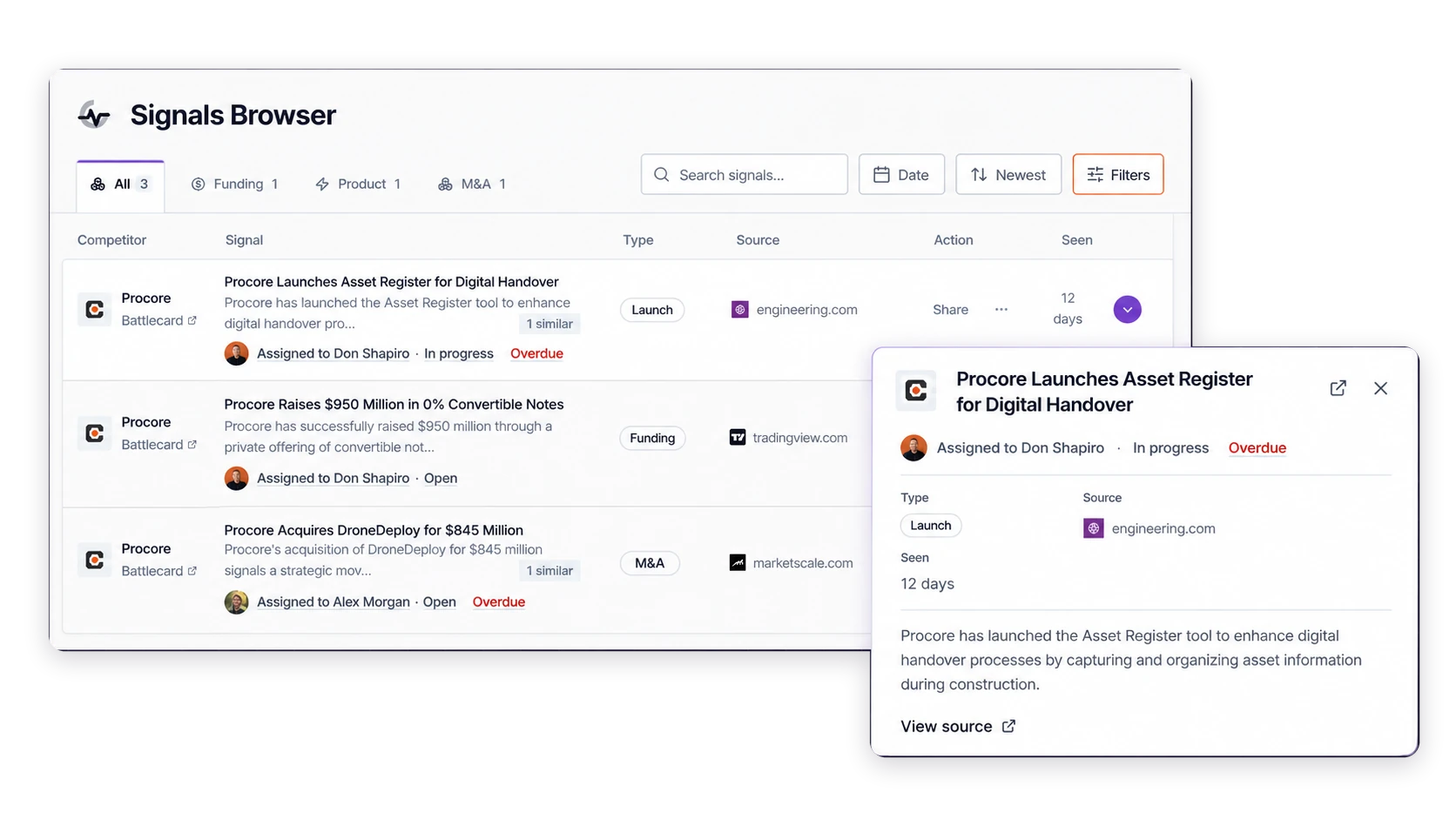
Filter classified market signals by competitor, event, source, and date so you can prioritise the changes that shape positioning and proof.
A competitor move or buyer objection can change the story after the launch is already under way. Segment8 keeps the evidence, positioning, proof and battlecards together, so Product, Marketing and Sales work from the same current answer.
You have the competitor research, buyer insight and positioning. The hard part is keeping that context intact as Product, Marketing and Sales put it into practice. Every separate document creates another version to explain and maintain.
Segment8 keeps the evidence, decisions and owners with the messaging and plans they affect. A colleague can understand why the direction changed and see what they need to do next.
Filter classified market signals by competitor, event, source, and date so you can prioritise the changes that shape positioning and proof.
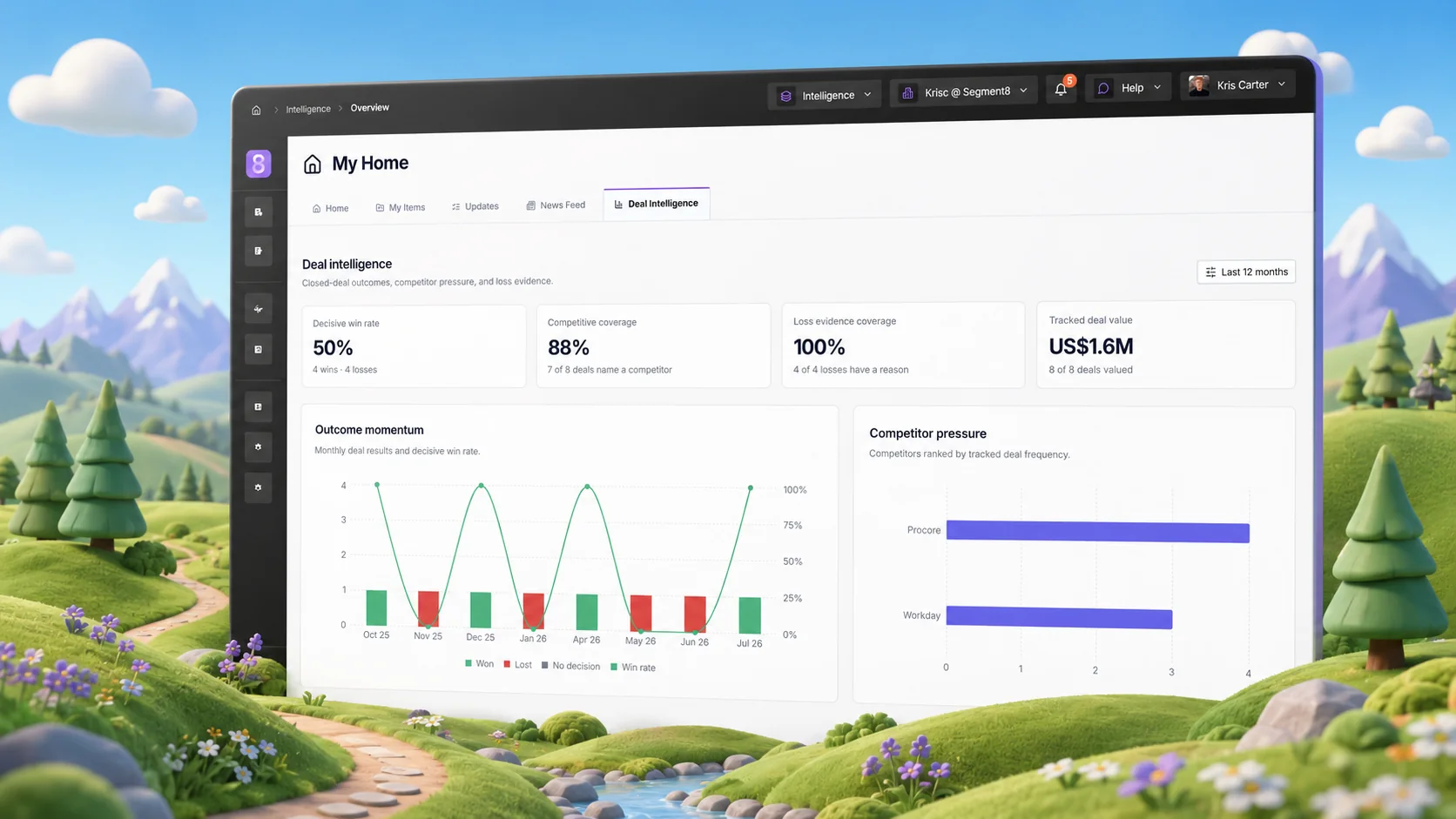
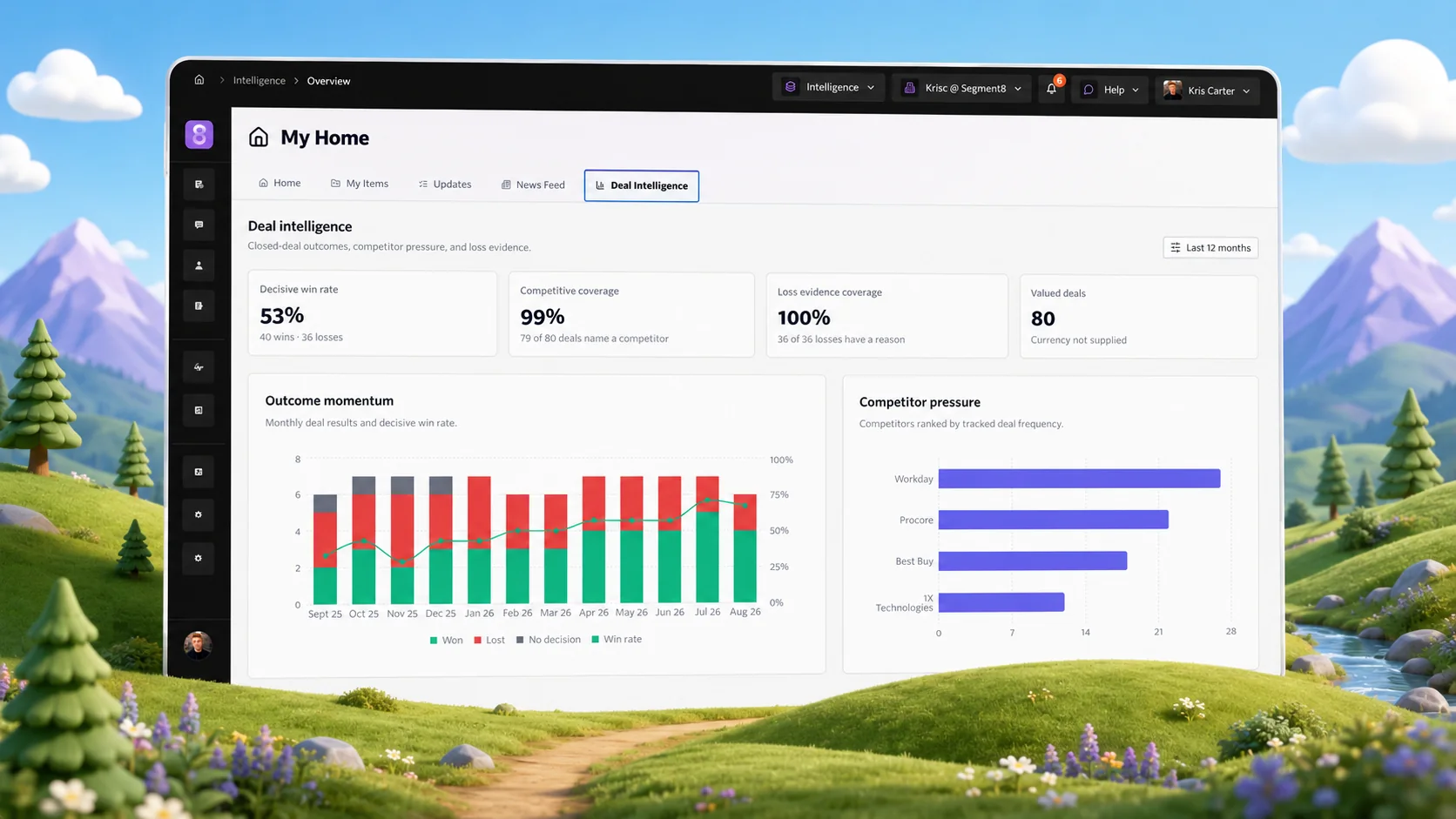
Compare deal outcomes and structured buyer responses to identify the objections, proof points, and conditions that shape conversion.
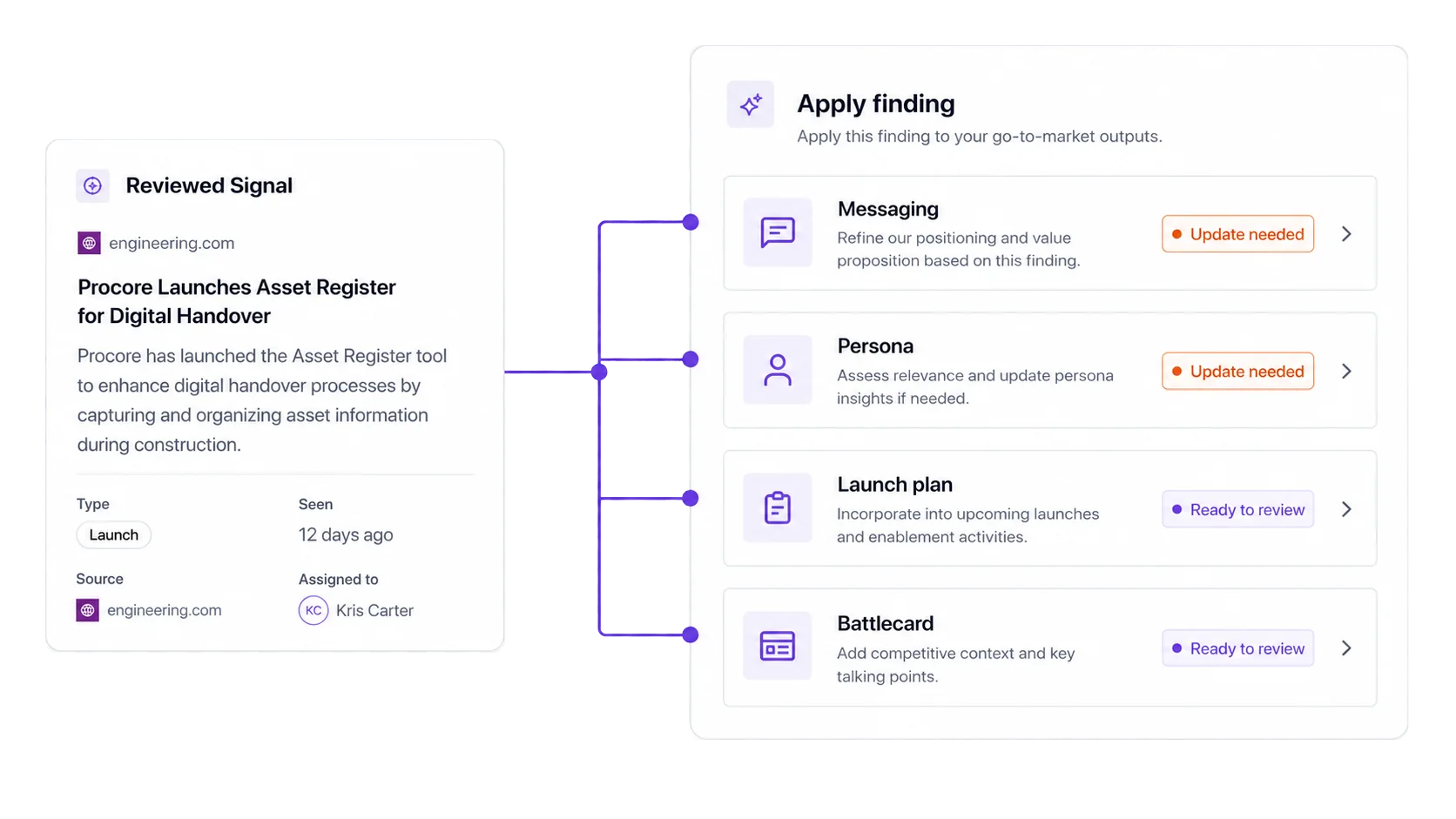
Apply the same evidence to positioning, personas, launch plans, battlecards, proof, and objection handling so every asset tells the same story.
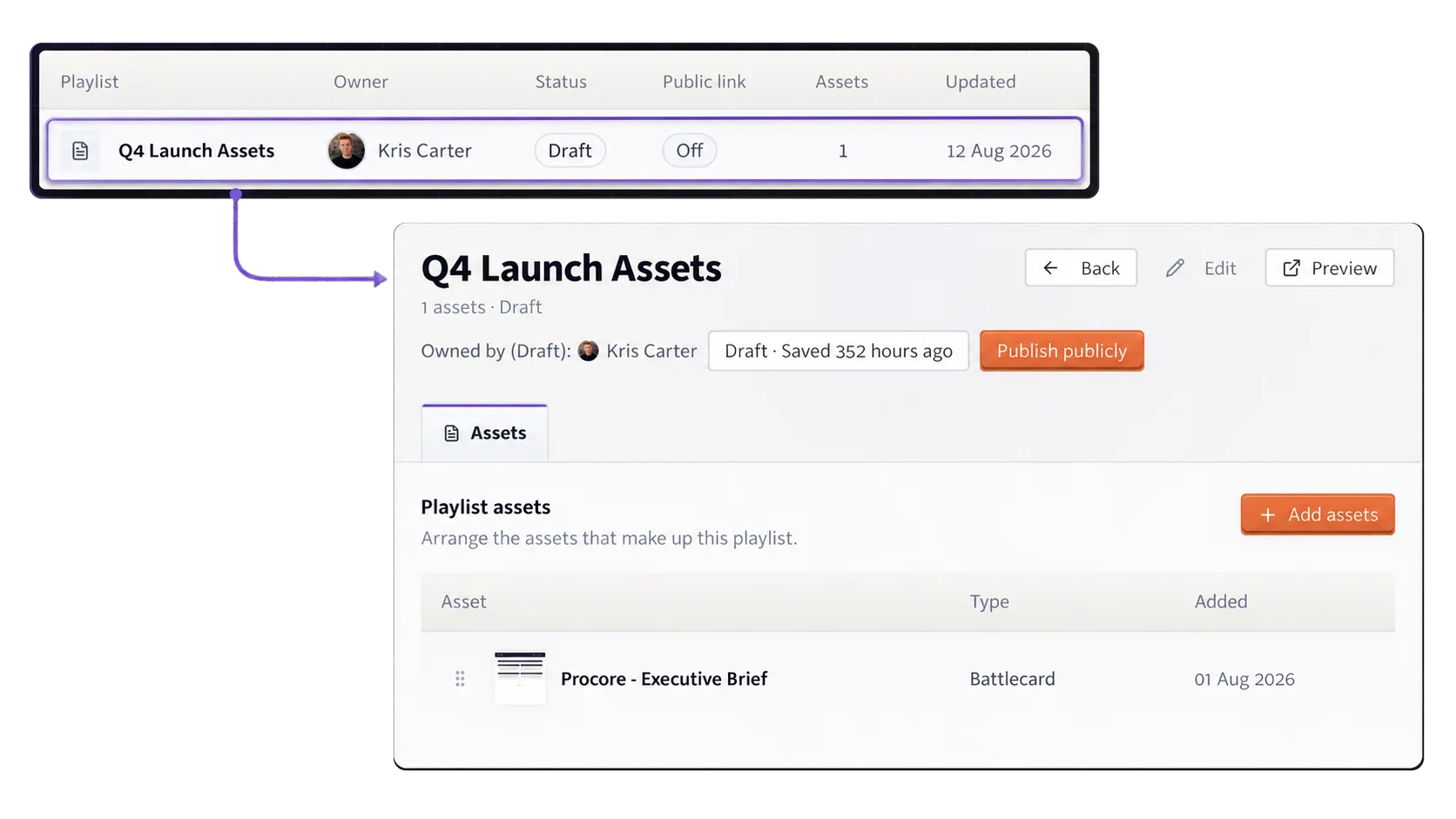
Package guidance into playlists and share relevant updates through email, approved Slack channels, and exports to support active deals.
A change in the market or launch plan can affect messaging, personas and battlecards at once. Keep the evidence with those updates, coordinate review and get the approved story to Sales.
Review competitor activity in a classified feed with the original sources attached. Spend your attention on what the change means for your positioning and your team.
A competitor or buyer finding can change positioning, persona guidance, a launch plan, and a battlecard. Keep the context together as you make the update.
Use battlecards, playlists, email recaps, approved Slack channels, and exports to put guidance where the revenue team works.
What the platform does, who it helps, and how it connects to the work your team already does.
Request a demoIt gives product marketing a repeatable way to monitor competitors, judge material changes, connect them to deal and buyer evidence, and update the positioning and sales guidance affected by the finding.
Segment8 keeps source-linked competitor activity alongside mapped HubSpot or CSV deal outcomes and structured win-loss responses, so teams can compare market events with the deals they won and lost.
Yes. Product marketers can use the reviewed competitor, buyer, and deal evidence to update battlecards, messaging, proof, comparisons, and objection handling without rebuilding the context in separate tools.
Teams can package reviewed guidance into battlecards and playlists, then share relevant updates through email, approved Slack channels, and exports.
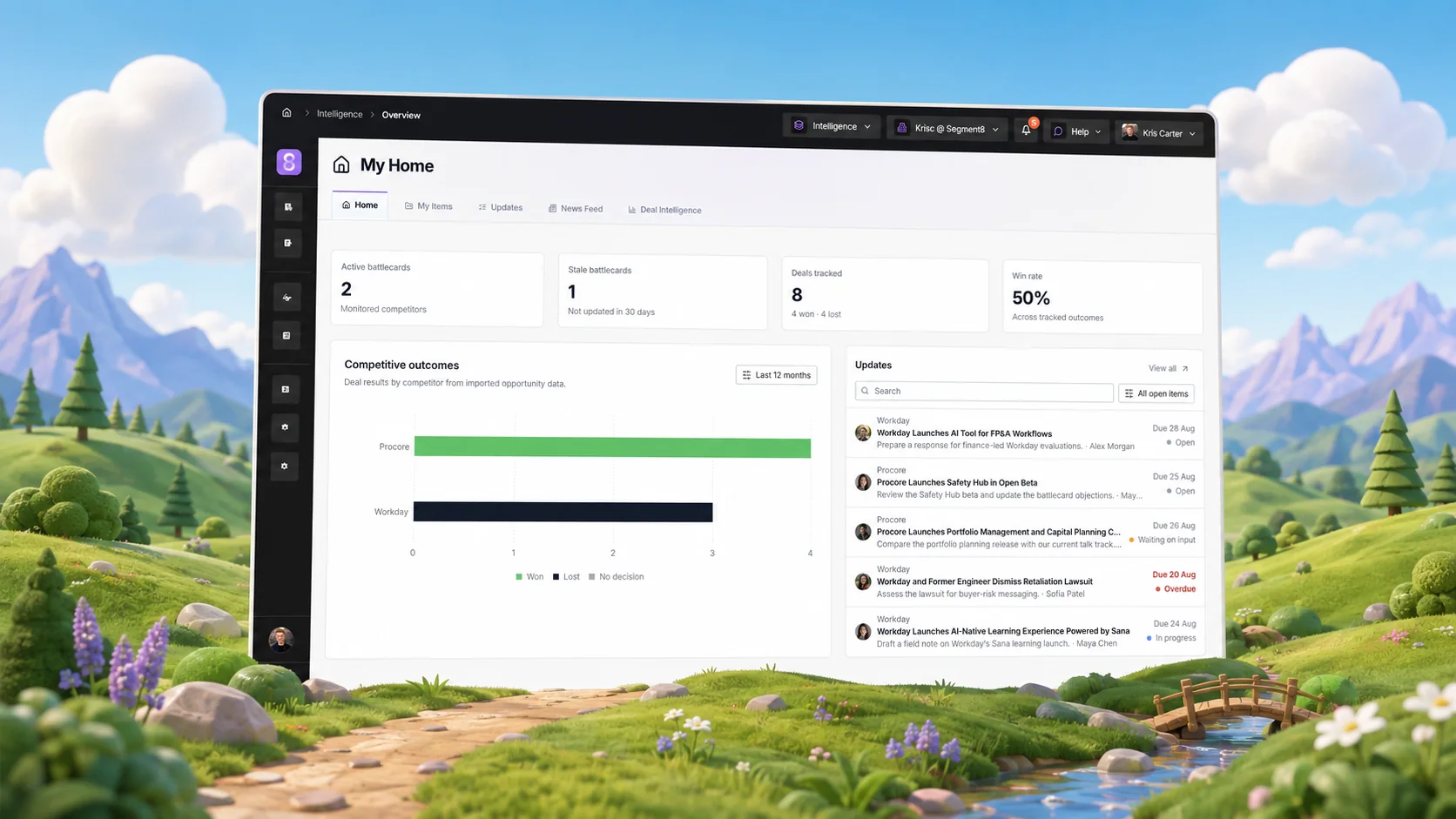
See how Segment8 replaces scattered competitor research, CRM reports and launch docs with one place to update the answer Sales needs.
Read the article →
Use this guide to test whether a platform removes the handoffs that leave your team rebuilding the answer in every deal.
Get the guide →
Bring the competitor move, buyer objection or launch change that is stuck. We will show how Segment8 turns it into an assigned update, approved battlecard or seller answer.
Request a demo →