More assets do not fix a broken message
One change to a product message can create several jobs. A battlecard needs new proof. A launch brief needs different wording. Sales needs an updated explanation. When those items live in separate tools, Product Marketing becomes the human integration layer. That is not a promotion.
Segment8 brings the evidence and the work together. Market findings, deal results and buyer feedback inform positioning, messaging, personas, battlecards and launch plans. Owners prepare the response, colleagues help and approval workflows record the review. The approved guidance can then be packaged for the sellers who need it.
That is the focus of this Seismic alternative guide. Segment8 helps Product Marketing decide what the message should be and coordinate the work needed to put it into use. The team can follow the decision from evidence to the finished sales material.
Establish the message before changing the assets
A message is a decision about how your business should explain the product. It needs a buyer, a problem and proof. Updating several assets without settling that decision can leave the team with different versions of the same argument.
Segment8 keeps positioning and messaging beside the evidence used to prepare them. The owner can review competitor sources, relevant deal results and direct buyer feedback. The team can then decide which claim needs to change and how the product should be explained.
That gives the asset work a clearer starting point. The people preparing battlecards or launch material are working from the same decision. Reviewers can assess the claim and proof in context, instead of trying to work out the intended message from several finished files.
Give the team a reason for the change
A useful message update has an explanation behind it. A competitor may have introduced an offer that changes the buyer's options. Buyer research may show that a claim is unclear. Deal analysis may reveal a question Product Marketing needs to investigate.
Segment8 connects those inputs to the content work. Competitor Signals retain their original source. HubSpot or CSV records provide deal outcomes, values and recorded loss reasons. Structured buyer surveys give the team a direct account of the evaluation, kept separate from what the sales team entered in the CRM.
The owner can use that evidence to write a specific brief. The response may need clearer wording, a better proof point or a different emphasis for a buyer group. The people preparing the work can see why the change matters and what they should produce.
Read about deal and buyer evidence.
Keep the product and buyer clear
A business with several products may use similar language in different sales situations. The same claim can need different proof depending on the product and the buyer. Product Marketing needs to keep that context visible when it prepares guidance.
Segment8's personas connect buyer problems and needs to messaging. Battlecards hold objections, proof and seller guidance. Positioning explains the wider product argument. The owner can use those related records to decide how a message should work in each situation.
For example, a capability may address a requirement for one buyer and provide supporting value for another. The team can prepare the proof and emphasis that fit each case. Sales receives an answer designed for the conversation, while Product Marketing retains the evidence and ownership behind it.
Coordinate the content affected by one decision
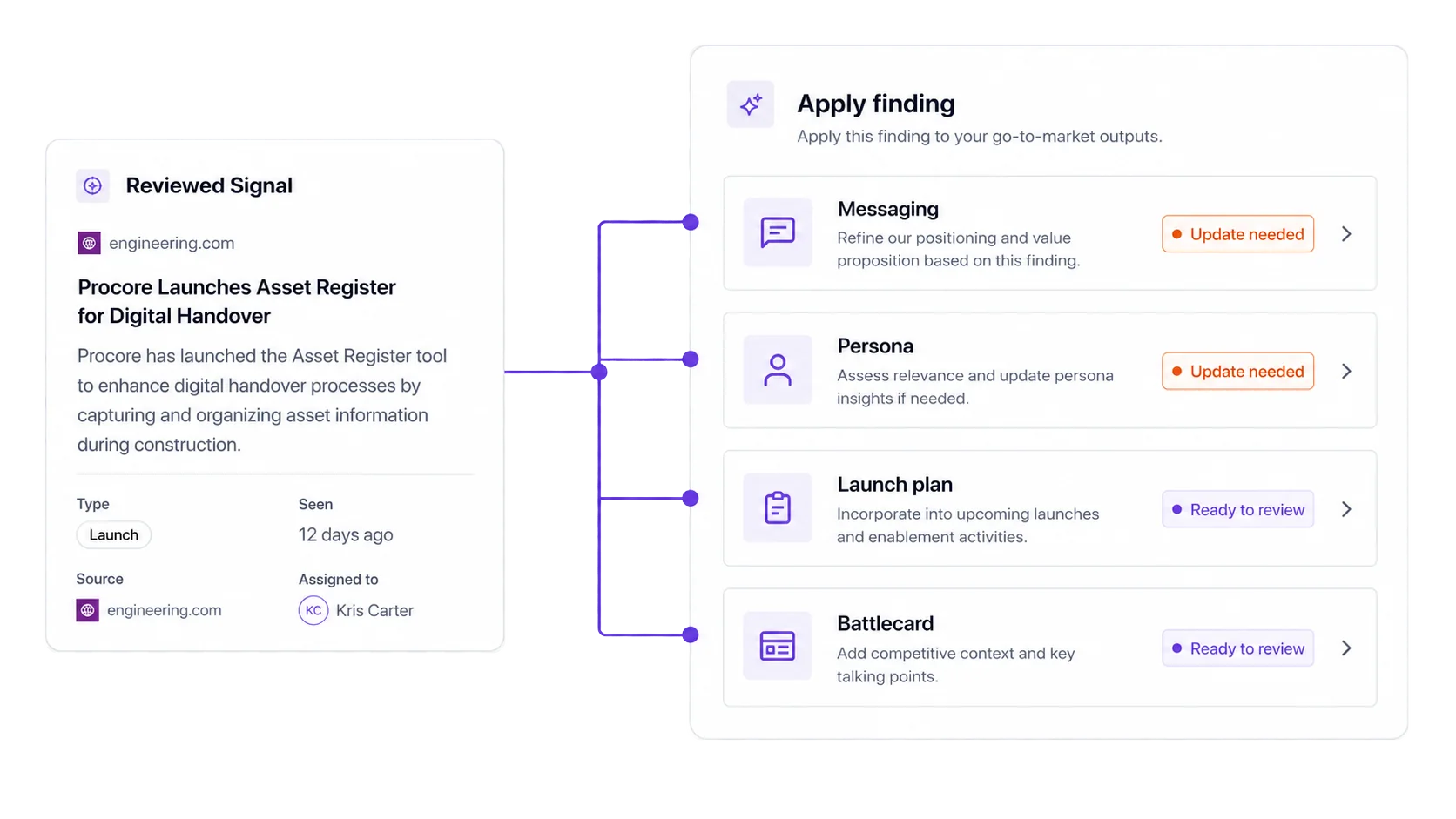
A changed message can affect a persona, battlecard and launch plan at the same time. Your team needs a way to identify the work and make it clear who will handle each part. Segment8 provides the product marketing records and assignments for that response.
Give the task an owner, instruction and due date. Bring in collaborators to supply product knowledge or help prepare the content. Keep the finding and the reason for the update available to the people doing the work.
The response can then move across the related outputs with responsibility kept clear. A manager can follow progress. A contributor can understand the result needed. The team can explain which parts of the message have been prepared and which still need review. The work is tied to a business decision rather than a general request to refresh the content library.
Read about product marketing workflows.
Organise the launch work around the message
A launch needs more than a list of assets. The team needs to know who the audience is, what the message should say, which proof is required and who must prepare the material. Segment8's launch plans connect those decisions to owners, dates, assets and measures.
Workstreams and milestones help the team organise what must be ready. The launch owner can identify the battlecard, messaging and persona work needed for the release. If new evidence changes the plan, the affected work can be given to the right people.
This makes the launch plan a working part of the message process. The team can prepare the content, review it and assemble the approved guidance for Sales. The final material reflects the launch's audience and purpose, with responsibility for each part still visible.
Make the approval requirement clear
Segment8 lets managers set how product marketing content should be reviewed. They can choose the approvers and require everyone to approve, or set a number of approvals that is enough. They can also require new approval after edits.
These rules give the team a clear expectation before the review begins. The owner knows which decisions are needed. Reviewers can see the content version, the review progress and the next responsibility. The process does not depend on someone remembering an informal sign-off in a separate conversation.
That is useful when the same message will appear in several assets or launches. The team can review the source guidance and keep the decision available as it prepares the outputs. Approval becomes part of the product marketing work that makes the answer ready for the field.
Keep review feedback with the content
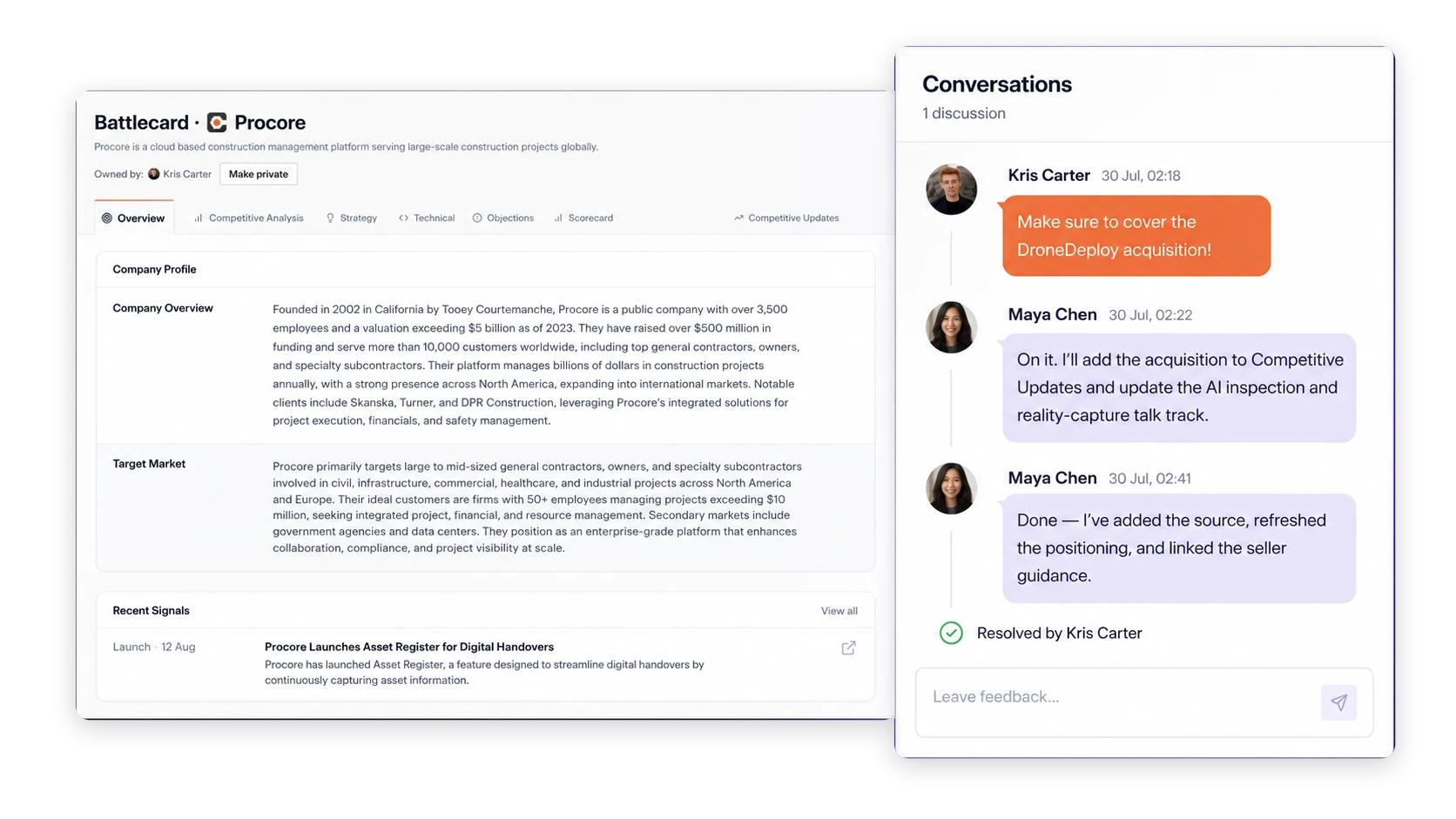
A reviewer can approve the guidance or request changes in Segment8. Their notes stay with the workflow, giving the owner a record of the decision and what needs attention. The owner can then prepare the response with the feedback in view.
A review might ask for a more precise claim, stronger proof or wording that better fits the audience. Those are content decisions that affect what Sales will say. Keeping the notes and current responsibility visible helps the team move the work towards a clear result.
Segment8 also shows content that changed since approval. The history and timeline retain review decisions and handoffs. The team can follow what was checked, which version it covered and how the work moved forward. This makes the review useful to the people maintaining the message later.
Change a launch message while keeping the work together
Imagine buyer feedback shows that the planned launch message is missing an important concern. Product Marketing reviews the responses alongside deal results and market evidence. The team decides to change the emphasis and strengthen the proof for the target buyer.
The messaging owner prepares the revised argument. The persona owner reviews the buyer problem. A battlecard assignment covers the related objection, while the launch owner identifies the assets and dates affected. Each output has a person responsible for it, and each is tied to the same evidence.
Reviewers assess the new guidance, request changes where needed and record their decisions. The team can then assemble the approved material for Sales. The launch message has changed through a coordinated process, with the reason, work and review available to the people involved.
Give Sales a collection that tells one story
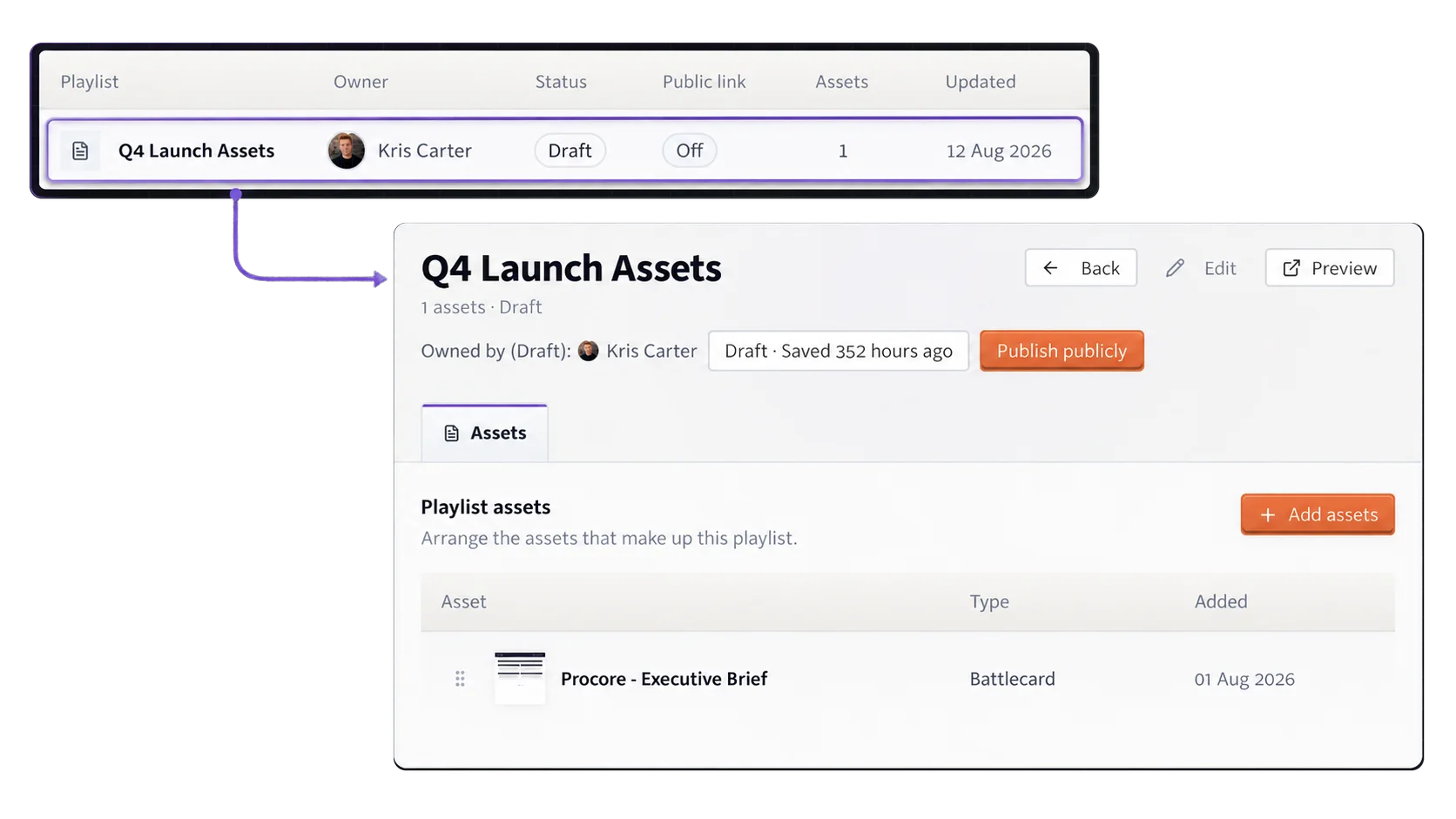
The final sales pack should help sellers explain the launch clearly. Segment8 playlists bring approved guidance and exports together for the intended audience. Product Marketing can assemble the battlecard, messaging and supporting material around the release.
Reviewing the collection together helps the team check that the selected items support the same message. Each item has a purpose and people responsible for maintaining it. The seller receives a prepared set of answers rather than a folder that they must interpret for themselves.
Segment8 supports guidance in the product, email and connected working channels. Seller audiences remain separate from editing and publishing rights. The team can distribute the answer while keeping responsibility for the content and its future review clear.
Read about sales guidance and delivery.
Handle a finding that affects several products differently
A competitor's new package may matter to one part of your product range more than another. Buyer feedback may raise a concern that affects one audience but not every buyer. Product Marketing needs to decide where the response belongs before asking everyone to update their content.
Segment8 gives the team the related evidence and records for that decision. Review the relevant deal group and buyer responses, then identify the positioning, persona, battlecard and launch work affected. Give each response an owner and an instruction that describes the result needed.
The team can prepare different answers for different situations while working from the same finding. Approval gives each proposed response a review path. The material can then be packaged for the right sellers and launch. The business gets a focused change with clear responsibility, rather than one generic message applied everywhere.
Keep the process clear as more people join the work
More products and launches usually mean more people contributing. The team needs to know who owns the message, who can help prepare it, who must review it and who should receive the result. Segment8 makes those responsibilities part of the work.
The owner stays accountable for the content. Collaborators contribute. Approvers make the review decision. The seller audience uses the approved guidance. Being able to read the answer does not automatically give someone authority to edit or publish it.
This gives Product Marketing a repeatable way to organise new work. A manager can follow assignments and progress. Owners can see the requested outcome. Reviewers can understand the decision needed. The team can use the same process across launches while preparing messages that fit different products and buyers.
Review the launch message as well as the asset list
A team can have every asset on its list and still have questions about the message. The battlecard may use an old proof point. The launch brief may describe a different buyer concern. A seller pack may include material that has not been through the latest review.
Use the launch plan to bring those questions into the same discussion. Start with the audience and the product argument. Look at the related persona, message and battlecard. Ask the owners to identify what is ready and what still needs a decision. Segment8 keeps those records and responsibilities available to the team preparing the release.
The approval view adds another useful check. You can see the content version, required decisions and current responsibility. If changes were requested, the owner has the notes needed to prepare the response. If the content has changed since approval, the team can see that too. The review is tied to the work being prepared.
Then inspect the seller collection. Does it include the approved answer and the proof needed to explain it? Is it prepared for the audience the launch is trying to reach? Are the people responsible for maintaining the material clear? These questions connect the launch plan to what Sales will actually receive.
The result is a more useful account of readiness. Product Marketing can show the message, the content and the review behind the release, as well as the remaining work. Segment8 gives the team a way to keep those parts together while the launch moves forward. That makes the plan about preparing the business to explain the product, rather than simply marking a list of files as complete.
See how one message change moves through Segment8
Bring a message that affects several assets to a demo. Follow the evidence into the positioning, persona, battlecard and launch plan. Assign the work, inspect the approval and look at the final seller collection.
That makes the product marketing system behind the content visible. Your team can establish the message, coordinate the related work and prepare the guidance for Sales in one connected process. The owner can explain the decision and the field can use the result.
Request a Seismic alternative demo around a product or launch your team needs to coordinate next.
Seismic alternative FAQs
Yes. Segment8 connects research, positioning, messaging, personas, battlecards and launch work. Owners prepare the response, colleagues help and approval workflows record the review. The team can then assemble the approved material for the sellers who need it.
Yes. Launch plans connect the audience, message, owners, dates, assets and measures. Workstreams and milestones help the team organise what must be ready. Approved guidance and exports can then be packaged into playlists for the intended seller audience.
Give the work an owner and route the proposed guidance through approval. Managers can choose reviewers, set the approvals needed and require another review after edits. Segment8 shows content changed since approval and keeps the decisions and handoffs in the history.
Choose one message change that affects several assets. Follow the evidence into the positioning, battlecard and launch plan. Assign the work, inspect the approval and open the seller collection. This shows the whole process your team can run in Segment8.
Identify the related messaging, battlecards, personas and launch work, then give each response an owner and clear instruction. Segment8 keeps the work and evidence together. The proposed guidance can go through review before the team prepares the approved material for Sales.
Yes. The launch plan identifies the audience and message, and seller audiences control who should receive the guidance. Product Marketing can prepare the required material, get it reviewed and assemble the approved items into a collection for that selling situation.
Use examples where similar claims need different proof or wording for different buyers. Look at the related positioning, personas and battlecards, then follow the work into a launch and seller pack. This shows how the team can keep product and buyer context clear.
It connects the message, audience and assets to owners and dates. The team can coordinate the workstreams, review the related guidance and package approved content for Sales. The final collection is prepared around the launch and its buying situation.
A collaborator helps prepare the work. The seller audience receives and uses the approved guidance. Access to the answer does not automatically grant editing or publishing rights. The owner stays responsible while the team involves the people needed to prepare and review the content.
Look at the research, writing, launch planning, review and delivery work your team needs to finish. Include the other tools and staff work involved. Compare current pricing for that scope so the buying decision reflects the whole job, not only one licence.