A document is not a GTM operating system
Product marketing work often starts in documents. Someone creates a competitor page, a messaging brief, a launch checklist and a battlecard. As the team grows, it also creates rules for how those items relate, who owns them and which version Sales should use.
Segment8 gives that work a system built for the job. Competitor research, deal results and buyer feedback connect to battlecards, positioning, messaging, personas and launch plans. Ownership, collaboration, approval and seller access are part of the workflow.
That is the reason to consider Segment8 as a Notion alternative for GTM work. GTM means taking a product to market. Your team gets a place to run the research, decisions and content work together, with people responsible for preparing the answer and getting it to Sales.
Look at the process your documents are supporting
A collection of pages can represent a much larger working process. A competitor page holds research. A battlecard prepares an answer. A launch checklist coordinates people and dates. A message brief records a decision about what the business should say.
The team also has to maintain the connections between them. If research changes the message, someone needs to identify the affected battlecard and launch work. If content needs approval, someone needs to know who should review it and which version was checked.
Segment8 brings those jobs into the product marketing workflow. The team can work with records designed for the purpose, assign the response and follow the review. The value is the process your team can run, as well as the content it can store.
Use records designed for product marketing
Different pieces of guidance serve different purposes. Segment8's battlecards keep objections, proof and seller guidance together. Positioning and messaging explain the product argument. Personas connect buyer problems and needs to the message the team prepares.
Launch plans bring together the audience, message, owners, dates, assets and measures. Playlists package approved guidance and exports for a seller audience. These are related outputs of the same product marketing work, with people responsible for them.
This gives the team a clear place for the next response. An objection update belongs in a battlecard. A finding about buyer needs may affect a persona or message. A launch change belongs with the owners and assets it affects. Product Marketing can spend its effort on the decision and content, while the product provides the structure around the work.
Read about built-in product marketing workflows.
Bring new competitor evidence into the process
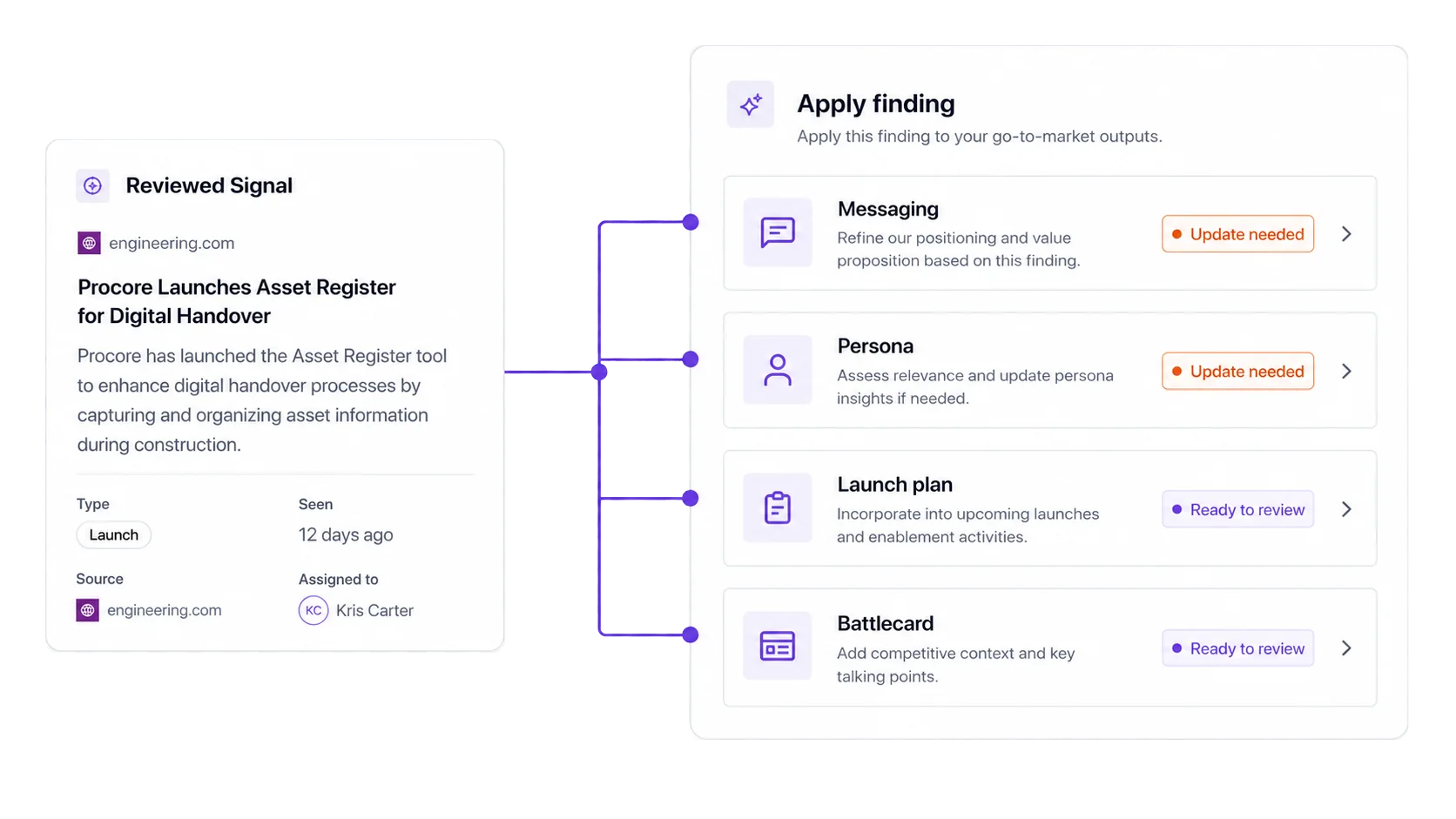
Moving documents alone does not give the team a way to respond to new information. Product Marketing needs inputs that help it decide when guidance should change. Segment8 brings sourced competitor findings into the same platform as the content and assignments.
It follows approved news and specialist sources, plus selected competitor-owned pages. Captured activity becomes a Signal with its original source and competitor details. Your team can filter by competitor, type and period, then open the material to check the claim.
That gives an update a clear starting point. The owner can see what happened and decide which product marketing work needs attention. The finding can become an assignment instead of remaining a link copied into a page and left for someone to notice later.
Read about competitor intelligence.
Add the evidence from deals and buyers
Segment8 also brings in HubSpot or CSV deal records. The team maps the relevant fields, checks a preview and reviews outcomes, deal counts, values and recorded loss reasons. Filters help Product Marketing investigate a particular period, competitor or deal group.
Structured buyer surveys add direct feedback. Your team chooses the questions and participants, then reviews responses by question. The buyer's account stays separate from the sales team's CRM field, so you can compare both sources.
Together, those inputs help the team choose useful content work. A finding may call for clearer proof, a different message or a revised objection response. Product Marketing can prepare that response in the related records and keep the evidence available to the people reviewing it.
Read about deal and buyer analysis.
Give the response a person and a next step
A new finding can affect several records. Someone needs to decide which work matters, who will prepare it and when it is needed. Segment8 connects those responsibilities to assignments and product marketing content.
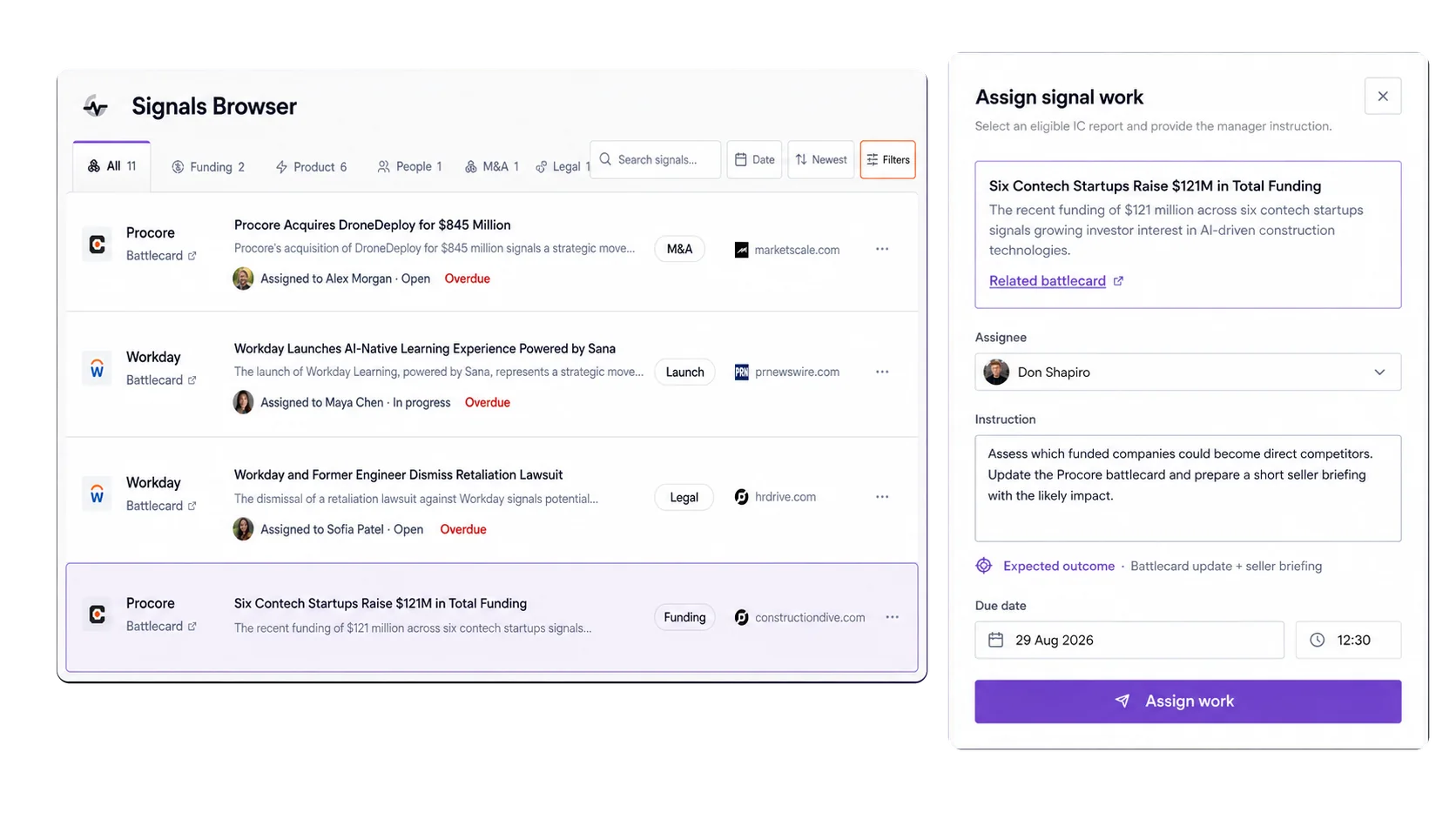
A selected Signal can become an assignment for a manager or team member. Add an instruction and a due date. Keep the owner clear and bring in collaborators to help with the product details, research or wording.
The person doing the work can inspect the evidence and understand the requested result. A manager can follow progress. The team has a way to move the response forward without relying on a separate set of page conventions and informal reminders to explain who is doing what.
Replace informal sign-off with a visible review
A note saying that someone approved a document can leave questions about what they reviewed and whether the content has changed since. Segment8 connects approval to the content version, chosen reviewers and current responsibility.
The approval view shows progress against the required decisions. Reviewers can approve or request changes, with notes kept for the owner. Managers can require all chosen reviewers to approve or set a number of approvals that is enough.
Policies can also require new approval after edits. Segment8 shows content changed since approval and keeps decisions and handoffs in the history. The team can follow the review behind the answer it gives Sales, with the next action and person responsible still clear.
Keep reading rights separate from editing rights
Several groups may need the same guidance for different reasons. Product Marketing prepares it. Colleagues help with the details. Reviewers decide whether it is ready. Sellers need to use the final answer.
Segment8 keeps those roles separate. The owner remains responsible for the content, collaborators help prepare it and approvers review it. The seller audience receives the approved guidance without automatically gaining the right to edit or publish the record.
This gives the team a repeatable way to share work. More sellers can use the answer while responsibility stays clear. When the message needs a change, the team knows which owner and review process to involve rather than trying to infer authority from who can open a page.
Run one launch through the whole process
Take a launch with a defined buyer audience and a competitive claim to explain. Product Marketing reviews the market and buyer evidence, prepares the positioning and develops the persona information. The team writes the battlecard response and identifies the assets Sales will need.
The launch plan coordinates owners, workstreams, milestones and measures. Assignments make the next actions and due dates clear. If a competitor announcement changes the situation, the team can inspect the source and give the affected work to its owner.
The guidance then goes through approval. Reviewers can ask for changes and record their decisions. The team packages the approved material into a seller playlist and shares it through the chosen delivery path. Research, content, coordination, review and sales guidance have moved through one connected product marketing process.
Start with the work your team uses today
A move to Segment8 should begin with active product marketing work. Identify the battlecards Sales uses, current positioning and messages, useful personas and launches still in progress. For each item, establish its owner, audience and supporting evidence.
Review the content as working material. A battlecard may need a clearer answer. A message may need better proof. A launch may need its owners or dates made explicit. Segment8 provides the records and assignments for preparing that work as the team brings it into the platform.
Start with one product or launch and complete the process. The useful result is an owned, reviewed collection of guidance that Sales can use. That gives the team a basis for deciding which additional product marketing work should move next.
Test how the new process handles a change
The first set of content is only the start. The team also needs a way to handle new evidence after the records are in place. Use a real competitor finding or buyer concern to test that process.
Identify the affected message, battlecard, persona or launch work. Give the response an owner and a clear instruction. The owner can inspect the source, prepare the change and bring it through review. The approval view shows the version and decisions involved.
This makes the move about how the team works over time. Segment8 provides a route from new information to an updated answer, with people responsible for each step. The content stays part of an active product marketing process instead of becoming another library that the team must remember to refresh.
Give Sales a prepared collection of guidance
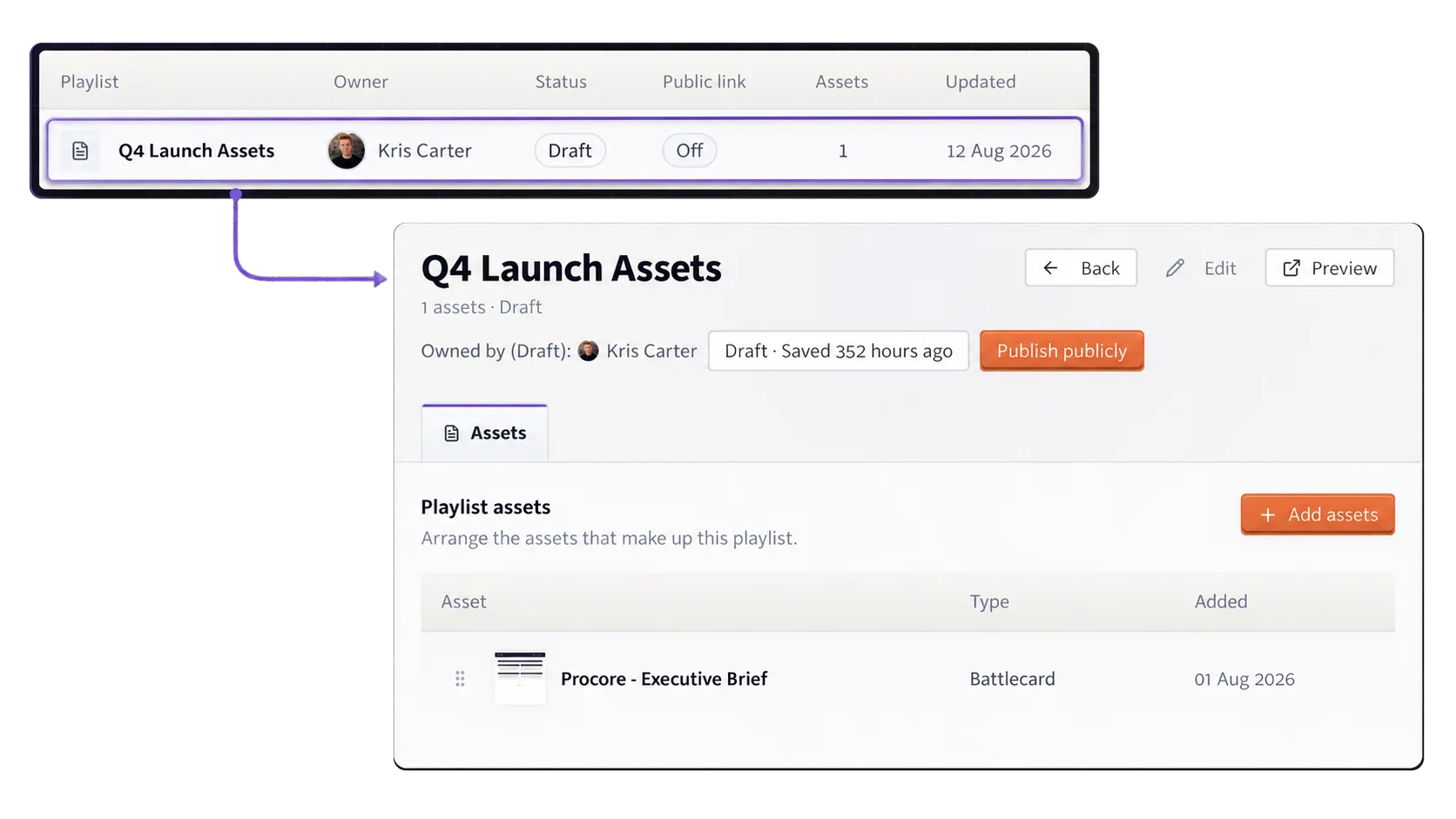
Segment8 playlists package approved guidance and exports for a seller audience. Product Marketing can assemble the material needed for a product, launch or competitive situation, including the message and proof the seller should use.
Delivery through the product, email and connected working channels carries the guidance into use. Answers in enabled channels can point to cited evidence when a question needs more detail. Audience controls keep access to the answer separate from the authority needed to maintain it.
The seller receives a collection prepared for a purpose. Product Marketing retains the content, evidence and responsible owners. The team can explain the current answer and has a place to coordinate its next update.
Read about sales guidance and delivery.
Make the new process part of the team's routine
A product marketing system is most useful when the team uses it to make and finish decisions. Review important new findings, open research questions and the work already assigned. Check what is waiting for approval and what is ready for Sales.
Segment8 gives those discussions concrete records. The owner can explain the source and requested change. A manager can follow progress. Reviewers can see the content version and decision needed. The team can spend the meeting on the response rather than first finding out where the work stands.
This gives the business a shared account of what Product Marketing is doing. People can see what changed, why it matters and which guidance is being prepared. The product supports the working process around the team's judgment and content.
Use one battlecard to make the move concrete
Choose a battlecard that Sales uses now. Identify the product, competitor and buyer questions it covers. Open the sources behind its main claims and decide which parts are still useful. This gives the team a real piece of work to prepare in Segment8.
Give the content an owner. Bring in the colleagues who can help check the product details or improve the proof. Use the built-in battlecard to organise the objections, answers and supporting material. The related positioning and persona records help explain the wider product argument and buyer needs.
Then put the guidance through approval. Reviewers can ask for changes and retain their notes in the workflow. The owner can see the next action and the version under review. When the answer is ready, make it available to the intended seller audience and include it in the appropriate playlist.
Finally, use a new finding to test maintenance. Ask the owner to inspect the source, revise the response and follow the approval process again. The team can see how the content will stay useful after the initial move, including who is responsible for each part.
This gives Product Marketing a complete example of the new way of working. The battlecard has evidence, an owner, a review and a route to Sales. The team can use that experience to prepare other content and launches in the same way. The move becomes a change to the process around the documents, with a practical result the business can use.
See a purpose-built GTM system at work
Bring one active product or launch to a Segment8 demo. Follow the evidence into the message, battlecard and launch plan. Assign an update, inspect the approval and open the final seller collection.
That shows the change from coordinating work across documents to running it in a system built for Product Marketing. Your team can keep research, decisions, content and responsibility together while preparing guidance the business can use.
Request a Notion alternative demo around the product marketing work your team wants to manage next.
Notion alternative FAQs
Segment8 has built-in battlecards, positioning, messaging, personas and launch plans. Start with a real piece of work and look at the fields, owners, review and output it needs. The value is the product marketing process around the content as well as the record itself.
Yes. The launch plan connects the audience, message, owners, dates, assets and measures. Product Marketing can prepare the related battlecards and messaging, review the content and package approved guidance and exports into a playlist for the intended sellers.
The review is tied to the content version and chosen approvers. Reviewers can approve or ask for changes with notes. Managers can require all or a set number of approvals and another review after edits. The history keeps the decisions and handoffs.
Choose one launch or competitive update. Follow it from evidence through writing, assignments, review and seller delivery. Look at the work the team can complete and the answer Sales receives. That gives you a practical example before moving more content.
It means the product already has records and workflows for the work Product Marketing does: battlecards, messaging, personas, launches and seller guidance. Segment8 connects those records to evidence, owners and approval, so the team has less of the surrounding process to design through document conventions.
Start with active product marketing work. Identify the owner, audience and evidence for each item and choose what is needed for the first complete workflow. The goal is a useful process for preparing and maintaining guidance, rather than copying every page into another place.
Review the source, product claim and audience before making it approved guidance. Give any work needed a clear owner. Segment8 can help the team prepare the update and follow its review, so the moved content is useful in the new process.
Yes. Segment8 brings HubSpot or CSV results together with competitor findings and buyer feedback. Product Marketing can investigate a question and decide which message, battlecard, persona or launch work needs attention. The owner keeps the evidence available while preparing the response.
Give the active work an owner, use collaborators to help prepare it and define the seller audience. Assign responses to new findings with instructions and due dates. The approval workflow then gives the team a clear review before updated guidance reaches Sales.
Choose one product launch or competitive update with real evidence and a seller audience. Complete the research, writing, review and delivery steps. Use the result to agree how the team will work in Segment8 and which product marketing records should move next.