The call was useful. Now what?
A sales call can reveal an objection, a competitor claim or a buyer concern. Useful. But a recording does not update the message, write the battlecard or tell Sales what to say next. Somebody still has to turn the insight into a response.
Segment8 does not record calls. It brings structured buyer research, market evidence and deal outcomes into the same place as messaging, battlecards, personas and launches. The finding has somewhere useful to go: a message change, better proof or an updated battlecard.
That is the point of a Gong alternative for this job. The insight ends in a clearer message, better-supported battlecard or launch decision, with someone responsible for doing the work. A recording is evidence. It is not the operating system.
Start with what needs to change, not the transcript
A broad request to explain lost deals can produce a lot of numbers without giving Product Marketing a clear next step. Start with a question narrow enough to investigate. You might want to understand losses against one competitor, a change in the value of deals won or a concern that keeps appearing in one buyer group.
That question helps you choose the records and fields you need. Identify the period, products and competitors involved. Decide which outcomes belong in the analysis and what the team means by each field. This gives everyone a shared understanding of the group being discussed.
Segment8 connects the analysis to the work that follows. The team can use the finding to set a research question or ask a content owner to prepare a response. The report becomes part of a product marketing decision instead of an end in itself.
Bring HubSpot or CSV records into the same view
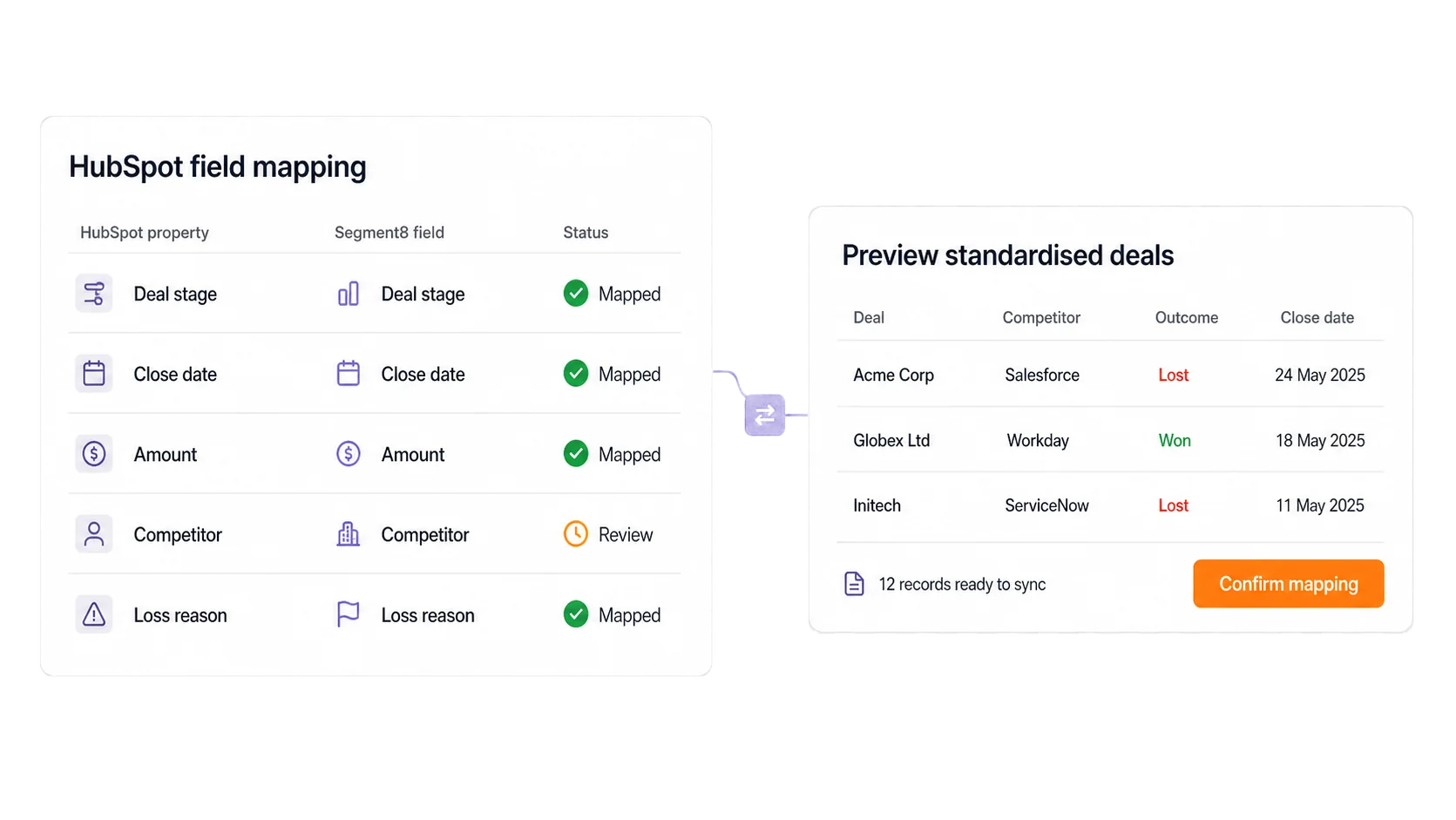
Segment8 supports HubSpot deal imports and CSV uploads. Your team maps the relevant fields and checks a preview before using the records. Fields such as outcome, close date, amount and competitor provide the basis for the analysis.
Use a sample that includes the kinds of records your team handles in practice. Look at a win, a loss and a record with missing information. Check that the imported values mean what the team expects. Different names for the same competitor can be grouped so the analysis reflects the actual business rather than spelling differences.
This preparation makes later discussions more useful. The person presenting a finding can explain where the records came from and what the fields represent. If a question comes up, the team can inspect the source data instead of arguing over a chart whose inputs nobody has checked.
Read about deal imports and analysis.
Compare the deals that belong together
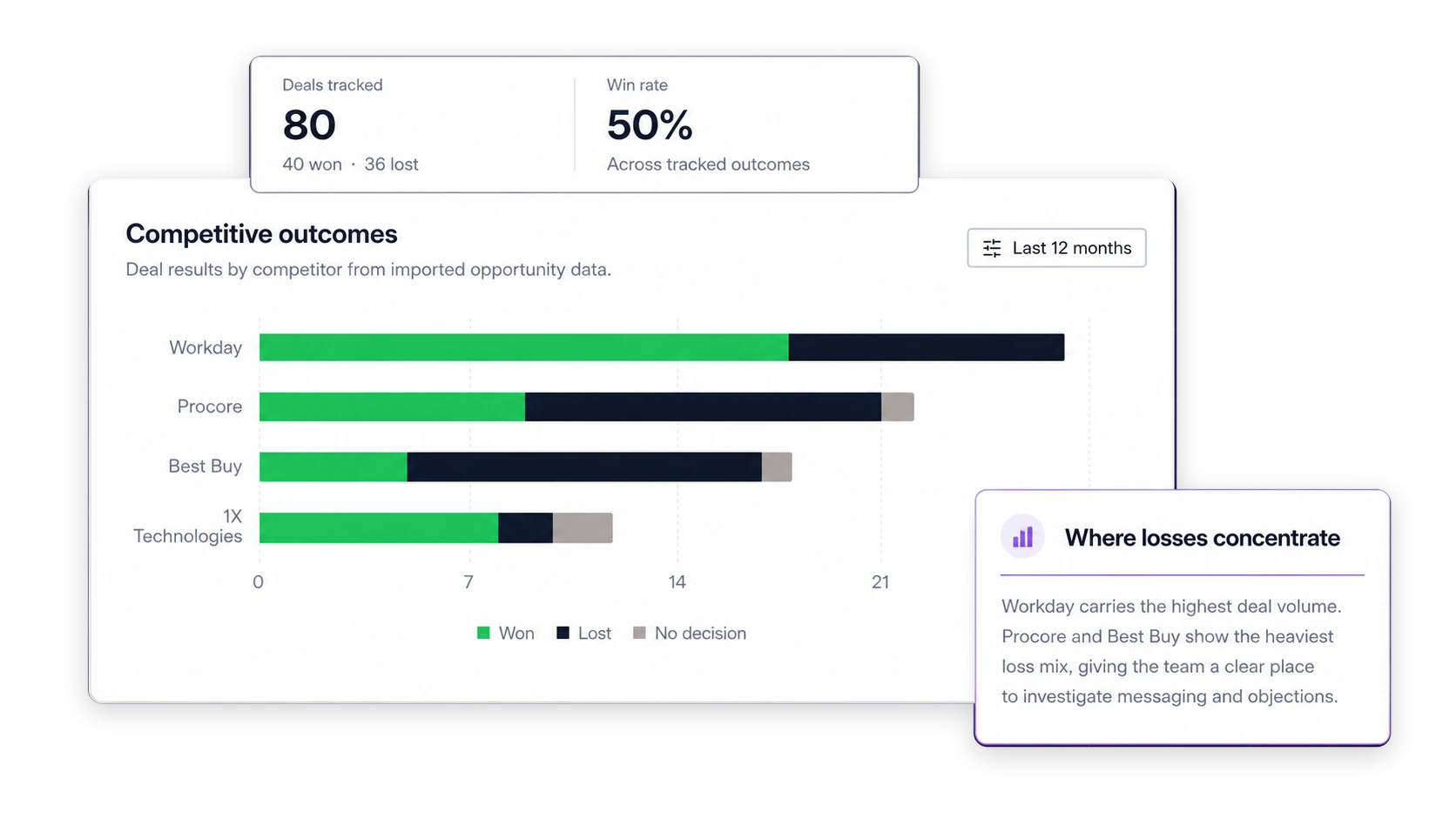
An overall win rate can hide several different stories. Small deals may behave differently from larger ones. The competitor mix may change between periods. A pattern that looks important across all records may be concentrated in one group.
Segment8 lets the team look at outcomes, deal counts, values, recorded loss reasons and changes over time. Filters help you narrow the view by period, competitor, outcome and deal size. You can examine the group behind a result before deciding which issue needs work.
For Product Marketing, that turns the finding into a more useful brief. Instead of asking someone to improve the competitive message in general, you can identify the buyer question or deal group worth investigating. The owner can prepare research and guidance for a situation the team can describe clearly.
Look at the deal count as well as the percentage
A percentage is easier to interpret when you know how many deals produced it. A small group can move sharply when one more deal closes. Deal value also matters: a few important losses may deserve more attention than a larger number of smaller outcomes.
Use the count, value and filters together. If the result changes from one period to another, look at whether the types of deals also changed. That gives the team a better basis for discussing what it has learned and what still needs investigation.
The point is to choose a useful next question. A pattern might lead Product Marketing to study proof requirements, packaging or the way a capability is explained. Segment8 keeps the deal view close to the buyer research and content work needed for that next step. The team can move from a number to a specific piece of work.
Treat a loss reason as the start of the investigation
A CRM loss reason is useful evidence, but it is usually a short account of a more detailed decision. It records what the team entered when the deal closed. Product Marketing can use it to choose where to look more closely.
Suppose several deals against one competitor are marked as lost on price. Your team can identify the relevant group, inspect the values and look at the recorded details. That gives you a defined question for buyer research: what did price mean to those buyers, and how did it affect the choice?
Segment8 keeps CRM evidence separate from direct buyer responses. You can compare the two accounts rather than treating them as the same source. The difference can help the team decide whether the response needs better value proof, clearer packaging information or a different explanation of the product.
Hear the buyer's account of the choice
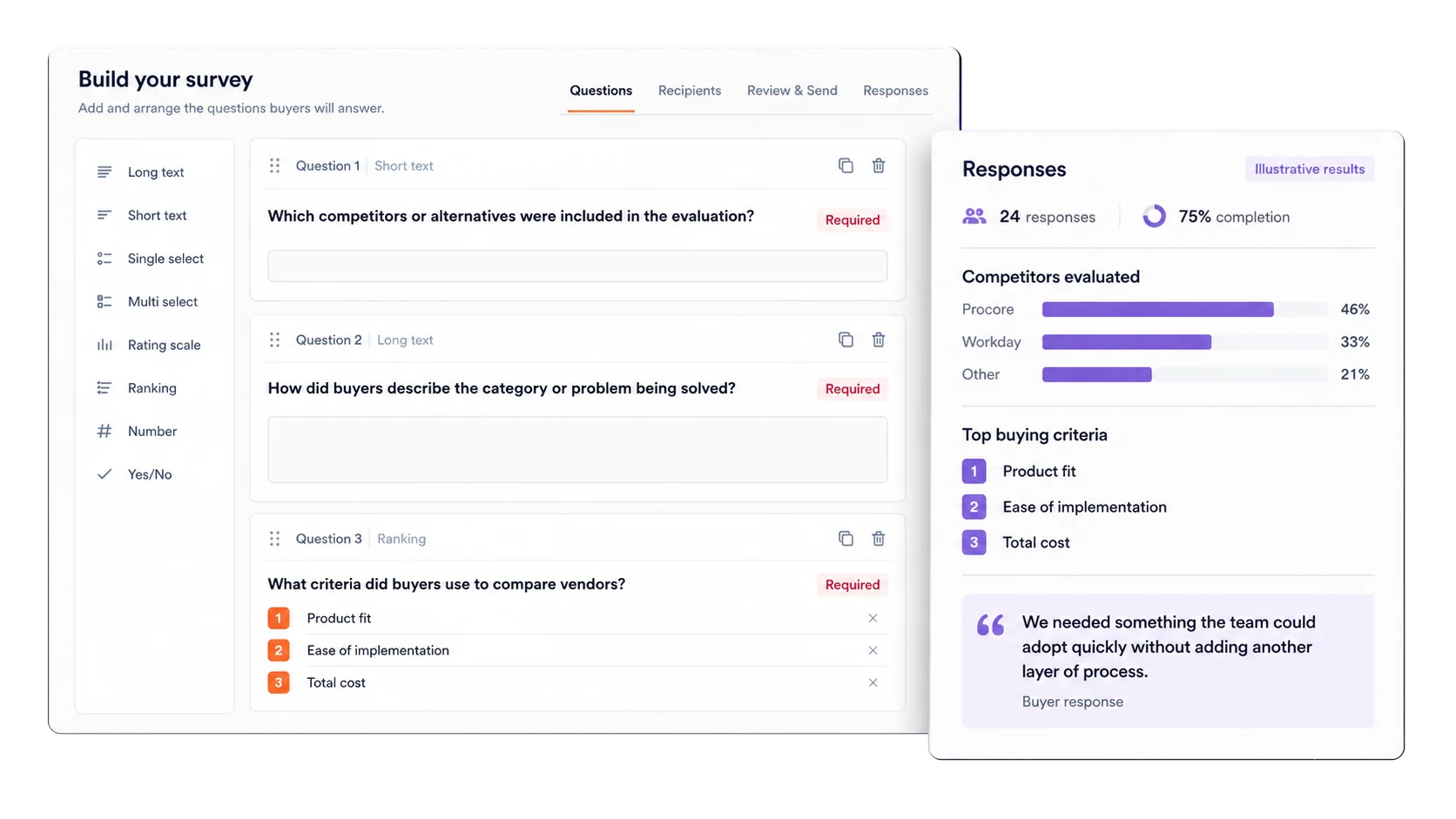
Segment8 supports structured win-loss surveys. Your team builds the questionnaire, chooses participant groups and sends individual invitations through the survey delivery workflow. Responses can be reviewed by question alongside the relevant deal evidence.
Choose the group around the question you need to answer. A concern affecting larger deals against one competitor needs research from buyers who can speak to that situation. Ask what mattered in the evaluation, which requirements influenced the decision and what proof the buyer needed.
This gives Product Marketing something more useful than a general instruction to improve the message. The owner can see what buyers said and how it relates to the deals being studied. The research can guide a specific change to positioning, a persona or the answer prepared for Sales.
Put the deal pattern beside what changed in the market
Deal data describes what happened in your pipeline. Market evidence can give the team another useful question to investigate. A competitor may have changed its package, announced a capability or started making a claim relevant to your buyers.
Segment8 brings sourced competitor Signals into the same platform as the deal and buyer evidence. The owner can open the original material, check the date and inspect the claim. That helps the team understand the situation around the deals it is studying.
The research becomes more specific. Product Marketing can ask whether buyers understood a difference, which proof they needed or whether the current battlecard addresses the concern. The team has evidence from the market, the CRM and the buyer, with each source available for review.
Read about sourced competitor intelligence.
Investigate a price-loss pattern and prepare an answer
Imagine the team has found repeated price losses against the same competitor. It first checks the deal group and the field definitions. Buyer research then asks what affected the decision, while the owner reviews the competitor's offer and relevant source material.
Suppose the research raises a question about how buyers understand the value of a capability. Product Marketing can prepare a clearer explanation and stronger proof. The positioning owner reviews the product argument. The battlecard owner prepares the response to the objection. Persona work helps the team address the buyer's concern in the right terms.
Those updates can go through approval before they reach Sales. The team has turned a recorded loss pattern into a researched response, with people responsible for preparing and checking it. The seller receives useful guidance rather than a request to interpret the analysis on their own.
Put the finding into the work it should change
Segment8 has built-in positioning and messaging, buyer personas, battlecards and launch plans. These give Product Marketing places to act on what it learns from deals and buyers.
A finding about proof may change an objection response. A finding about the buyer's priorities may change the persona or the emphasis in a launch message. The team can coordinate the related work around the same evidence while giving each output an owner and purpose.
Assignments add an instruction and due date. The owner can understand the question behind the request and see the result they need to prepare. A manager can follow the response through its progress. The analysis is connected to content the team can finish and use, rather than remaining in a separate report.
Review the proposed message before sharing it
An analysis and a sales message are different outputs. The analysis describes the evidence. The message makes a claim the business wants Sales to use. Segment8 gives that proposed guidance an approval workflow.
The approval view shows the content version, reviewers, progress and next responsibility. Reviewers can approve or request changes, with notes retained for the owner. They can ask for clearer wording, more relevant proof or a response better suited to the buyer group.
Managers can require all chosen reviewers to approve or set a number of approvals that is enough. They can also require new approval after edits. Segment8 shows when content has changed since approval and keeps review decisions and handoffs in the history. The team can follow how the evidence became an approved answer.
Read about messaging, battlecards and approvals.
Make the next sales conversation benefit from the research
The useful result of deal analysis is guidance the team can put to work. Segment8 supports approved content in the product, email and connected working channels. You can choose the seller audience while keeping editing and publishing rights with the people maintaining the guidance.
Playlists let Product Marketing package the battlecard, messaging and supporting material around the question the research addressed. Answers in enabled channels can point to the source evidence when a seller needs more detail.
That gives the learning a clear route into use. The business has investigated a pattern, heard from buyers, prepared a response and reviewed it. When new deal evidence raises another question, the team has the records and owners needed to continue the work.
Read about sales guidance and delivery.
Make the numbers easy for the team to understand
Consider two groups of deals. In one, your team has won two out of three. In the other, it has won thirty out of sixty. The first group has the higher win rate, but there are far fewer decisions behind it. One more loss would change its percentage sharply.
That is why the deal count belongs in the discussion. Segment8 lets the team inspect the count and value alongside the outcome. Product Marketing can see the group it is studying, then decide which question is worth further research. The number helps set a priority; the buyer evidence helps explain the decision.
The same care helps when comparing periods. A quarter with a different mix of competitors or deal sizes may produce a different overall result. Look at those groups before preparing a broad message about what buyers want. A clear explanation of the data makes the content brief more useful to the person doing the work.
This is also helpful when presenting the finding to colleagues. You can show the pattern, explain the size of the group and describe the next research or content task. The discussion stays close to the evidence and the response the team can prepare, rather than turning one percentage into a complete story about the market.
Bring a deal question to a Segment8 demo
Start with a representative set of deals and a question your team needs to answer. Follow the records through import and analysis, then look at how direct buyer research adds to the picture. Use the finding to prepare a message or battlecard response and inspect the approval and seller view.
That shows the value of Segment8 as a CRM-led product marketing system. Your team can understand the pattern, investigate the buyer's decision and act on the result in the same platform. The work has a destination beyond the dashboard.
Request a Gong alternative demo focused on the deal evidence your team already has and the guidance it needs to prepare next.
Gong alternative FAQs
No. Segment8 uses HubSpot or CSV deal records and direct buyer feedback from structured surveys. Product Marketing can investigate competitor patterns, values and loss reasons, then prepare messaging and sales guidance. The process starts with deal and buyer evidence.
Yes. You can upload a CSV and map the fields needed for the analysis. Review the preview, including outcomes and competitor names, before using the records. That gives the team an understood deal set for the question it wants to investigate.
Yes. Segment8 supports messaging, personas, battlecards, launch plans and assignments. Your team can turn a finding into a clear content task, prepare the response and get it approved before sharing the guidance with the intended sellers.
Reviewers can see the content version and approve or request changes, with notes kept for the owner. Managers set the approvals needed and can require another review after edits. The team has a clear path from the finding to the answer Sales uses.
It uses HubSpot deal data or a CSV, with buyer surveys available for direct research. The team can compare outcomes, deal counts, values and recorded reasons, then put those findings beside market evidence. Call transcripts are not required for that workflow.
Bring the fields relevant to your question, such as outcome, close date, amount and competitor. Include a useful sample of records, including some with missing information. Check the mapping with someone who understands your CRM so the analysis starts from clear definitions.
Look at the deal count, values, period and types of deals behind each percentage. Check that competitor names and outcome definitions are consistent. Then use the pattern to choose a question for buyer research and decide which guidance might need work.
Keep both accounts and investigate the difference. The CRM records your team's explanation; the survey records the buyer's direct response. Segment8 keeps them separate so Product Marketing can compare the evidence and prepare a message based on what it learns.
Yes. Your team can review the related positioning, messaging, personas and launch work. Give the changes clear owners and use the evidence to explain the brief. The proposed guidance can go through approval before it reaches the seller audience.
HubSpot provides connected deal records, and CSV import supports a separate deal list. Segment8 maps and previews the fields, helps the team analyse the results and connects findings to product marketing work. The source of the deal evidence remains clear.