Sales does not need another library
A buyer asks how your product compares with a competitor. The seller needs an answer that fits the question, explains the difference and includes useful proof. Product Marketing has to prepare that guidance and keep it current as the market changes. Another folder is not a rescue plan.
Segment8 connects the work behind the answer. Competitor sources, deal results and buyer feedback inform the battlecards, messaging and personas your team maintains. Owners prepare the response, reviewers check it and the approved material reaches the right sellers through playlists and other delivery paths.
That is the focus of this Showpad alternative guide. Segment8 gives Product Marketing a place to build useful competitive guidance from evidence, get it approved and share it with the field. The seller receives a prepared answer while the team keeps the source and responsibility behind it.
Start with a question Sales is hearing
A request for more competitive content is easier to act on when you know the question behind it. What is the buyer asking? Which competitor or offer are they considering? Which part of the answer is unclear to the seller?
Segment8's battlecards hold objections, proof and seller guidance. Positioning and messaging explain the wider product argument, while buyer personas help the team understand the audience. These records give Product Marketing places to develop the response for the actual situation.
The result should help the seller explain the product. A list of facts is useful background, but the guidance also needs to show why the relevant difference matters. Product Marketing can prepare that answer with the evidence and buyer context available, rather than leaving the seller to build the argument during the deal.
Check the competitor claim at its source
A competitive question often begins with something the buyer has heard or read. The team needs to know what the competitor actually said before deciding how to respond. A small difference in wording can matter to the answer.
Segment8 keeps original sources with competitor Signals. Product Marketing can open the material, check the product and claim involved, and identify what is relevant to its own buyers. Filters help the team inspect the findings for a competitor, event type or period.
The source stays useful while the answer is prepared. A product specialist can help check the meaning of the claim. The owner can use it to write a precise response. Reviewers can inspect the same material when assessing the proposed guidance. The team has a shared basis for the answer.
Read about sourced competitor intelligence.
Understand what the buyer is trying to decide
Two buyers can ask the same question for different reasons. One may be checking whether a product meets a requirement. Another may be trying to understand the value of the package. The proof and emphasis in the response should address that concern.
Segment8's personas connect buyer problems and needs to messaging. Deal analysis and structured buyer feedback add evidence from actual evaluations. Product Marketing can compare the buyer's account with the sales team's recorded loss reason while keeping those sources separate.
This helps the content owner prepare a more useful brief. The task may be to explain a capability, strengthen a proof point or clarify a package difference. The team can decide which response will help the seller address the question instead of using the same broad answer in every conversation.
Look at the deals behind recurring objections
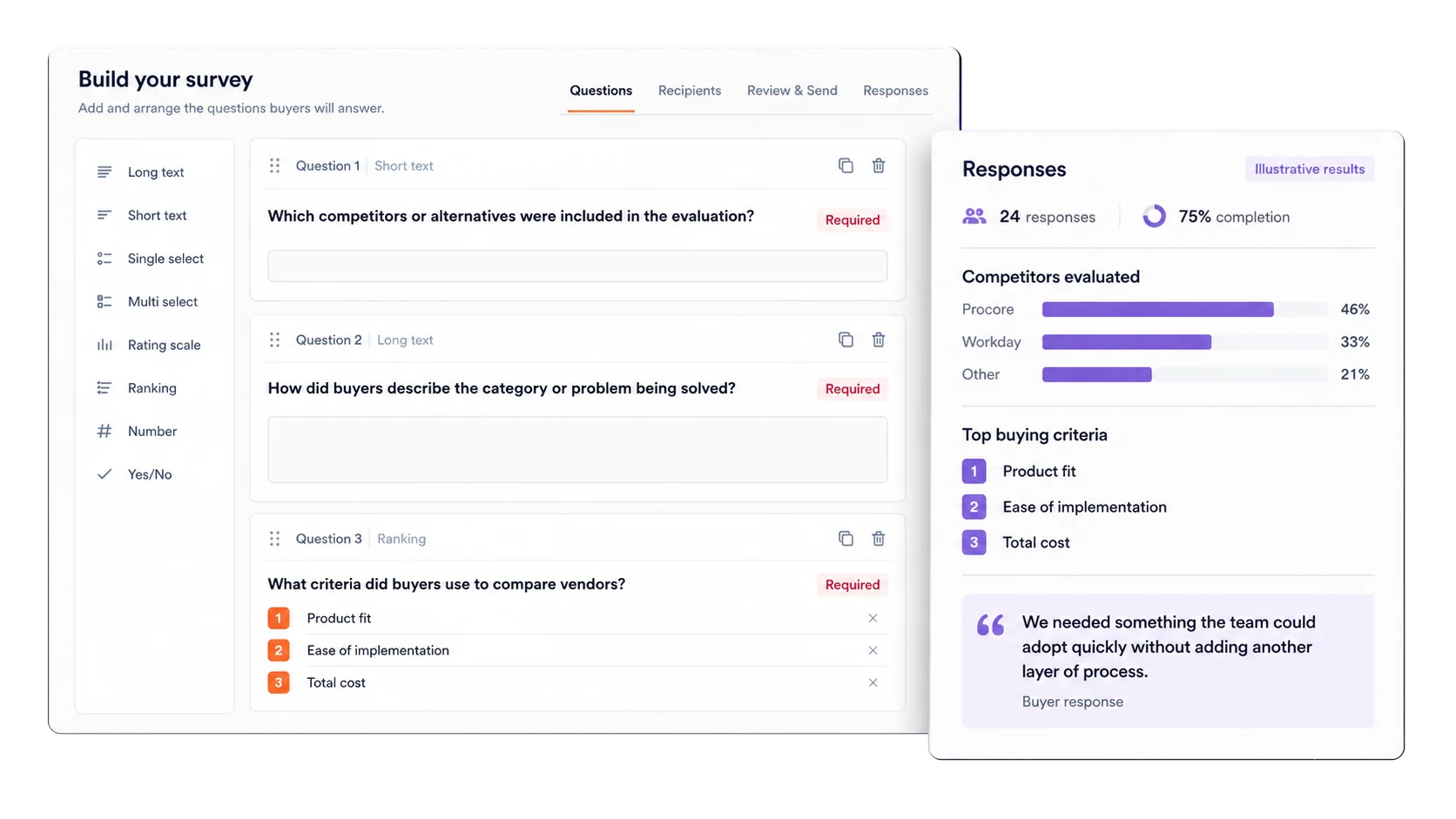
If sellers keep hearing an objection, Product Marketing can investigate where it appears. Segment8 brings in HubSpot or CSV records so the team can examine the relevant competitor group, period and deal size.
Review wins and losses, deal counts, values and recorded reasons. Direct buyer responses can add detail about what mattered in the evaluation. The research may show that the question is concentrated in a particular buyer group or connected to a specific part of the offer.
That gives the response a clearer purpose. The owner can prepare guidance for the situation the team has identified, with proof suited to the concern. The finding can also inform persona or messaging work, so the same learning helps Product Marketing prepare future content.
Read about deal analysis and buyer research.
Build an answer around the objection and proof
A battlecard should help a seller move from the buyer's question to a clear explanation. Segment8 gives Product Marketing a place to keep the objection, response and proof together. The owner can prepare the wording with the source and buyer need in view.
For example, a buyer may ask why one package costs more than another. The useful answer needs to explain the relevant difference and support it with proof. Persona and messaging work can help the team choose what matters to that buyer, while the battlecard prepares the response for Sales.
This creates guidance designed for use. The seller can understand when the answer applies and where the proof comes from. Product Marketing keeps the records needed to review and maintain it when the product or competitor changes.
Give the content an owner and a clear next task
Guidance stays useful when someone is responsible for it. A new competitor claim or buyer concern needs a route back to the people who can prepare a response. Segment8 connects the finding to assignments and product marketing content.
Give the work an owner, instruction and due date. Ask for a specific result, such as checking a claim or revising an objection response. Collaborators can help with product knowledge or proof while the owner remains accountable for the content.
The person doing the work can inspect the source and understand why the update matters. A manager can follow progress. The response becomes a job the team can finish and review, rather than an informal correction that each seller has to remember.
Read about battlecards and work assignments.
Get the message and proof approved
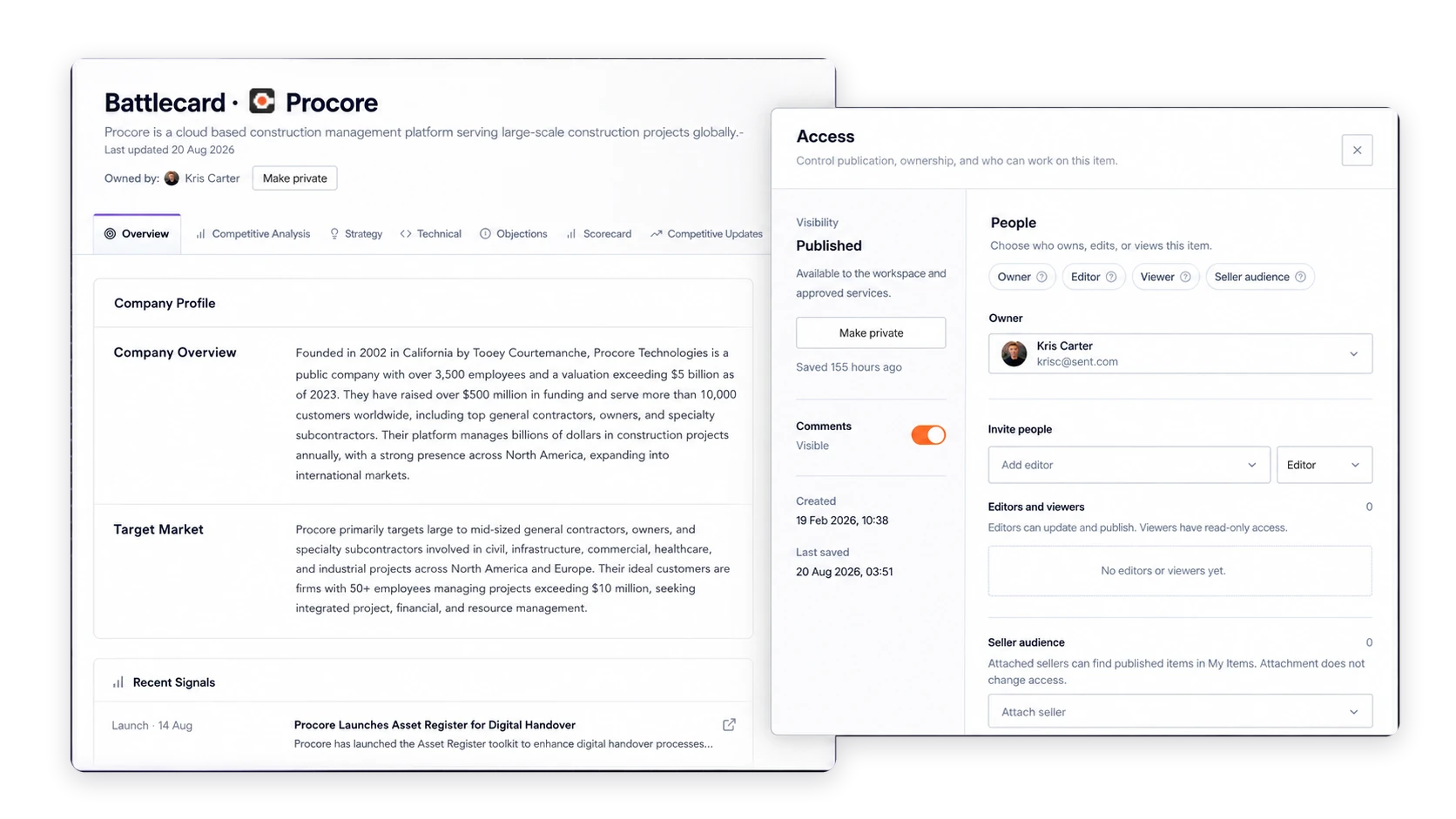
The answer a seller uses represents the business. Segment8's approval workflow gives Product Marketing a clear way to have the content reviewed before sharing it. The approval view shows the version, reviewers, progress and next responsibility.
A reviewer can approve the guidance or request changes, with notes explaining the decision. They may ask for a more precise claim, more relevant proof or wording that fits the buyer better. The owner can prepare the response with that feedback available.
Managers can require all chosen reviewers to approve or set a number of approvals that is enough. Policies can require new approval after edits. Segment8 shows content changed since approval and keeps the decisions and handoffs in the history. The team can follow how the proposed answer became approved guidance.
Prepare for two buyers asking about the same capability
Imagine two buyers ask whether a competitor includes a capability in its standard package. The first needs to meet a defined requirement. The second wants to understand whether the overall purchase offers enough value. The question sounds similar, but the answer needs a different emphasis.
Product Marketing checks the competitor source, reviews the relevant buyer evidence and uses persona information to understand each concern. The team can then prepare proof suited to the decision. The battlecard holds the response, while messaging explains how it fits the product's wider value.
The owner coordinates review of the claim and proof. The approved guidance is prepared for the relevant sellers. Segment8 keeps the evidence, content and responsible people together, giving the field an answer designed for the buying situation rather than a general product description.
Put the material a seller needs into one collection
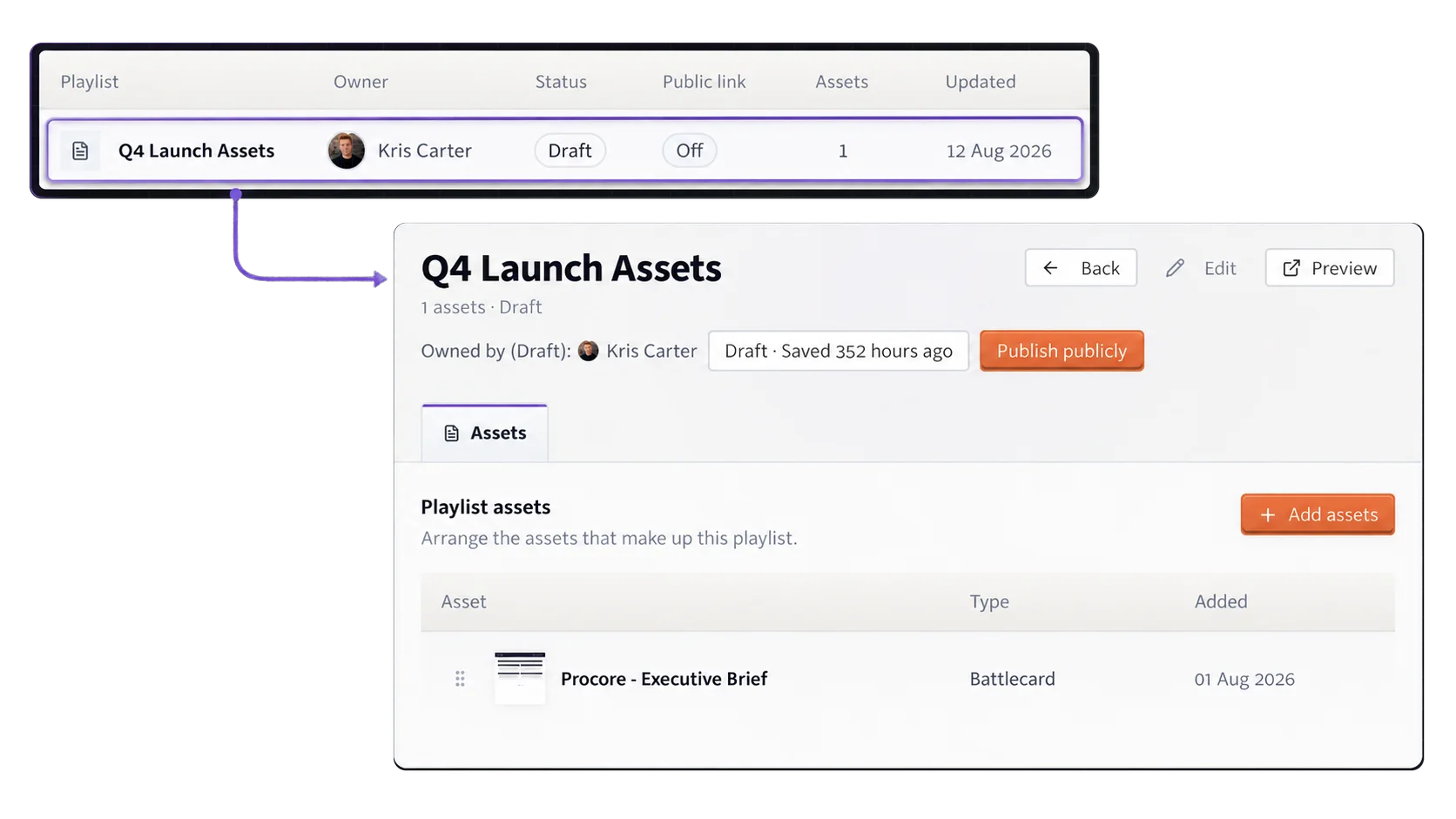
A competitive response can need more than a battlecard. The seller may also need a message brief or material explaining a new offer. Segment8 playlists let Product Marketing package approved guidance and exports for that purpose.
Start with the collection's job. Is it for a launch, a particular competitor or a buyer group? Choose the material that helps explain the answer and make sure the owners are clear. The pack should give the seller a coherent set of guidance they can use together.
Audience and publishing controls connect the collection to the people who need it. Product Marketing keeps responsibility for preparing and reviewing changes. The field receives a useful pack while the team retains the records needed to maintain it.
Share the guidance through the working path your team uses
Segment8 supports guidance in the product, email and connected working channels. Seller audiences define who should receive and use the answer. Editing and publishing rights stay with the people responsible for the content.
Answers in enabled channels can point to cited sources when someone needs more detail. Playlists provide the approved collection around a product or competitive situation. Email delivery status shows whether a message was accepted, delayed, bounced, failed or suppressed.
This makes delivery part of the same process as preparation and review. Product Marketing can take a seller question through the evidence, content and approval steps, then get the result to the intended audience. The guidance has a clear owner even after it has been shared.
Read about sales guidance and delivery.
Use field questions to improve the next launch
Questions from current deals can help Product Marketing prepare the next release. A recurring objection may reveal a message that needs more proof or a buyer concern that deserves more attention in the launch plan.
Segment8 connects that evidence to launch audiences, messaging, owners, dates, assets and measures. The team can identify the related battlecard and persona work, assign the response and coordinate the material needed for Sales.
The approval workflow then supports review before the guidance reaches the field. Product Marketing can prepare an immediate answer for current deals and carry the same learning into the next launch. The business has a way to use what sellers and buyers are telling it, with defined work and people responsible for the result.
Build the pack around the next buyer conversation
A useful sales pack has a specific job. Imagine a seller preparing for a meeting about your new package. They need to explain the offer, answer the likely competitive question and show proof relevant to the buyer. The collection should help them do those things without making them read every item your team has produced.
Start with the message the buyer needs to understand. Add the battlecard response for the competitor involved and the supporting material that explains the relevant proof. Persona information helps Product Marketing choose which concern to address first. The aim is a collection that works together around the decision the buyer is making.
Segment8 keeps these items connected to their owners and review work. The team can prepare the content, check the claims and assemble the approved material in a playlist. The seller audience identifies who should use it. The people maintaining the message and proof remain clear even as more colleagues receive the pack.
Review the collection from the seller's point of view. Is the answer easy to find? Does the proof support it? Can the seller tell when the guidance applies? These are practical content questions for Product Marketing and its reviewers. They help turn a set of approved items into a useful preparation tool for the meeting.
When a new finding changes the response, the team has somewhere to bring the work back. The owner can review the affected content, prepare the change and get it approved. The sales pack remains part of a maintained product marketing process, with people responsible for keeping the answer useful as the market and buyer questions develop.
Build the demo around a question your sellers ask
Bring a current objection and the answer your team uses today. Follow the evidence into buyer context, messaging and a battlecard. Open the approval view, inspect the proof and look at the playlist as a seller would.
That shows the job Segment8 brings together: preparing, approving and maintaining guidance that helps Sales explain the product in the situation in front of them. The research has a purpose and the final answer has an owner.
Request a Showpad alternative demo around a competitive question your team wants to answer more clearly.
Showpad alternative FAQs
Yes. It connects competitor sources, deal analysis and buyer research to battlecards and messaging. Your team can prepare the answer and proof, assign the work and get it reviewed before sharing the approved guidance with Sales.
Yes. Segment8 playlists package approved guidance and exports for a defined audience. Product Marketing can put the relevant battlecard, message and supporting material together for a product, launch or competitive situation, with responsibility for maintaining the content kept clear.
The approval view shows the content version, reviewers and progress. Reviewers can approve or request changes to the claim or proof, with notes kept for the owner. Managers can set the approvals needed and require another review after edits.
Bring an objection buyers raise and the answer your team uses today. Follow the evidence into messaging and a battlecard, inspect the review and look at the seller collection. That shows how Segment8 connects the work needed to prepare a better response.
The team can check the source, look at the relevant deals and buyer responses, and prepare guidance in a battlecard. Owners maintain the answer and reviewers check it. A later finding can become an assignment to update the response as the situation changes.
Yes. Personas help explain buyer problems and needs. Product Marketing can use that information to choose the message and proof for the conversation. Similar objections may need a different emphasis for different buyers, even when the underlying product facts are the same.
It brings approved guidance and exports together for the selling situation. The team can package a battlecard, messaging and supporting launch material as one collection. Sales receives the answer and proof together, while the owners remain responsible for maintaining the content.
An assignment asks someone to complete work, with an instruction and due date. Sharing guidance gives the approved answer to the people who need it. Segment8 keeps the preparation work and seller audience distinct, so it is clear who should act and who should use the result.
Yes. Segment8 supports source-backed answers through enabled working channels, as well as guidance in the product and email. Sellers can inspect cited evidence when they need more detail. Product Marketing maintains the underlying content and the responsibilities around it.
A checked answer to a real seller question, with useful proof, a clear owner and a working delivery path. Follow it from the source through writing, approval and seller access. That gives your team a concrete example of the complete job Segment8 can support.