The asset is not magic
Before Sales receives a battlecard or launch pack, Product Marketing has several decisions to make. What should the message say? Which buyer is it for? What proof supports it? Who needs to review the claim before a seller repeats it? The PDF is the last five minutes of the job, not the job.
Segment8 brings that work together. It connects market research, deal results and buyer feedback to positioning, messaging, personas, battlecards and launch plans. Owners prepare the response, colleagues help and approval workflows record the review. The approved guidance can then reach the sellers who need it.
That is the reason to consider Segment8 as a Highspot alternative for product marketing and sales enablement. It gives your team a place to create and approve the answer before it is distributed. The research and decisions stay connected to the material Sales uses.
Start with the question the content needs to answer
An asset request is often a sign of a question that has not yet been answered. Sales asks for a new slide because buyers do not understand a difference. A launch team asks for a brief because the message is unclear. Writing the asset is only part of the job.
Start by naming the buyer, the product and the concern. Segment8 gives Product Marketing the market, deal and buyer evidence needed to investigate that concern. The owner can work out whether the message needs clearer wording, better proof or a different emphasis.
This creates a more useful brief. The person preparing the content knows what the answer must explain and who will use it. Reviewers can assess the same evidence instead of trying to guess the reason behind a finished paragraph or presentation.
Give the message a reason the team can explain
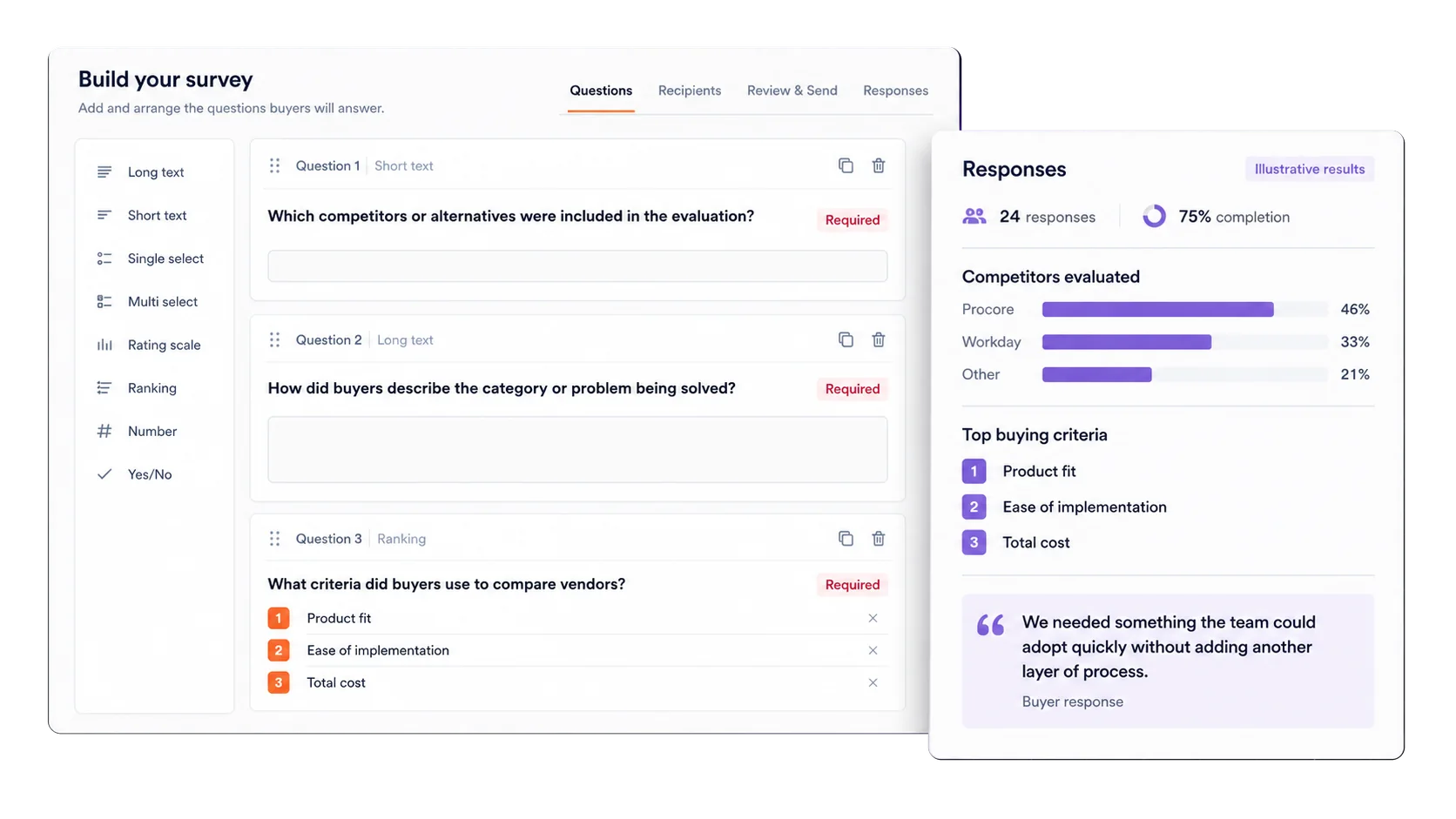
Segment8 keeps source information with competitor Signals, so the team can open the original material and check a claim. Deal analysis adds a view of the relevant wins, losses, values and recorded reasons. Structured buyer feedback gives Product Marketing a direct account of the concerns involved in the decision.
Those sources help the owner choose what to say. A recurring buyer question may show that the product's value needs a clearer explanation. A competitor announcement may create a new objection. A deal pattern may help the team choose which issue deserves attention first.
The final content should reflect that research. Product Marketing can explain why the message changed and where the proof came from. The person reviewing the guidance has the same basis for deciding whether the answer is ready for Sales.
Read about market evidence and deal and buyer research.
Match the message to the buyer
The same product feature can matter for different reasons to different buyers. One person may care about a specific requirement. Another may need to explain the value of the purchase to colleagues. A useful sales message takes that difference into account.
Segment8's buyer personas connect buyer problems and needs to messaging and guidance. Product Marketing can use that information when preparing a battlecard or launch message. The team can choose proof that addresses the concern of the buyer involved.
This gives the seller more than a list of product facts. The guidance can explain why the difference matters in that conversation. Product Marketing keeps the persona, message and evidence available so the answer can be reviewed and updated as the team learns more about its buyers.
Keep the related content in one product marketing workspace
Positioning explains the product's place in the buyer's decision. Messaging gives the team language for that argument. Personas describe buyer needs. Battlecards prepare answers to competitive objections. Segment8 has built-in records for these different parts of the work.
Keeping them together helps when one decision affects several outputs. A new value proposition may need to appear in a launch brief and a battlecard. A different buyer concern may require new proof in both. The owners can prepare those changes around the same evidence.
The work becomes easier to coordinate. Product Marketing has a place to maintain the answer, the people responsible and the reasons behind it. Sales can receive the approved guidance without having to join up several unfinished documents.
Read about product marketing workflows.
Make it clear who is preparing the answer
Content work moves more easily when people know what they own. Someone needs to prepare the message. Others may need to supply product knowledge or help with the proof. A reviewer needs to decide whether the answer is ready.
Segment8 keeps the owner clear and lets collaborators help prepare the work. Assignments can carry an instruction and due date, with the source and reason available to the person doing the task. Managers can follow the team's progress.
This helps turn a broad request into a finishable job. Ask for the message or objection response you need, identify the audience and give the owner the evidence behind the request. The team can then prepare the content with a shared understanding of the result.
Use a clear approval process
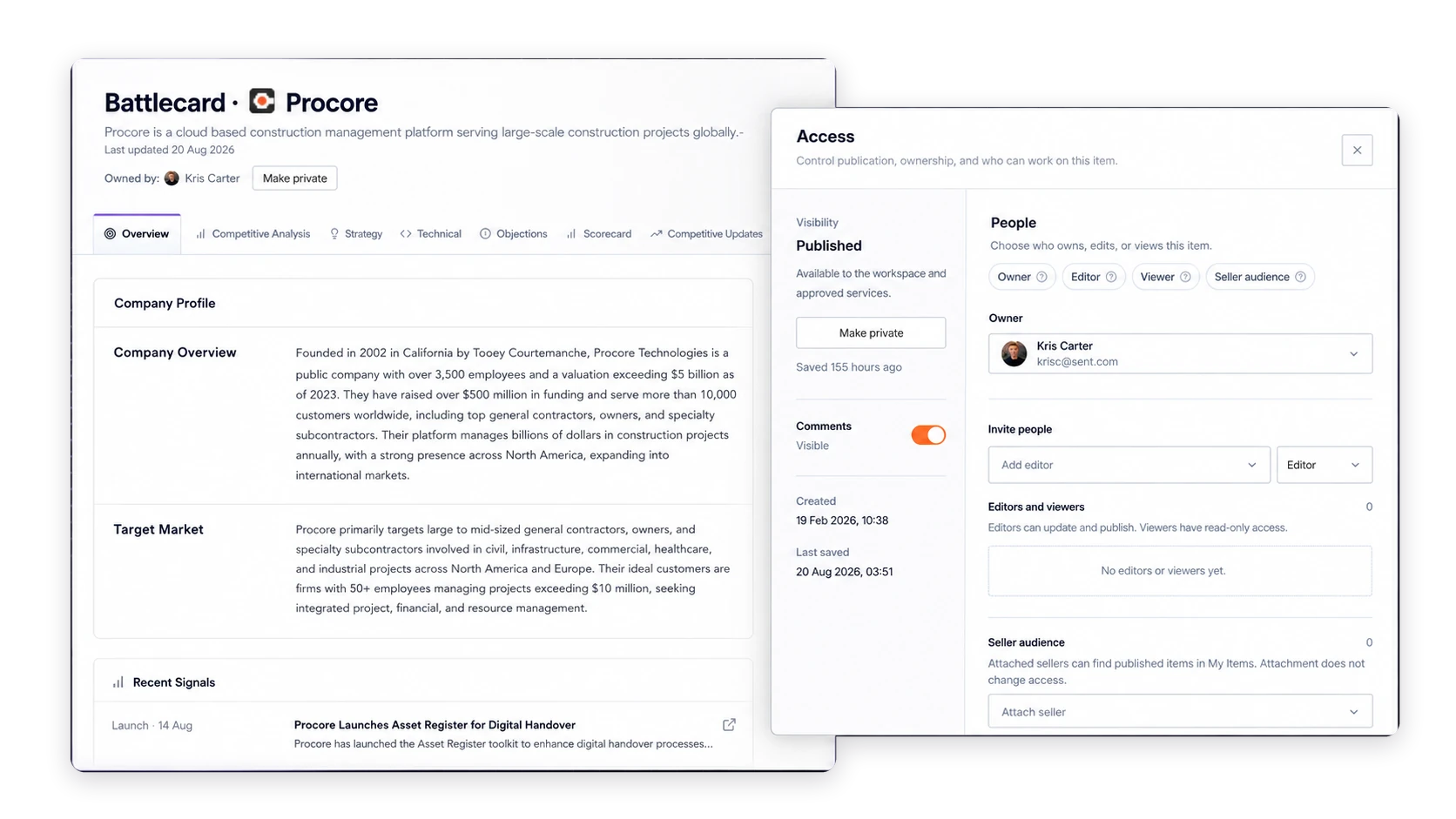
Segment8's approval view shows the content version, reviewers and progress against the required approvals. The owner can see what is waiting and who is responsible for the next step. Review is part of the content workflow.
A reviewer can approve or ask for changes, with notes explaining the decision. The owner can use those notes to improve the claim, proof or wording. Managers can choose whether all designated reviewers must approve or whether a set number of approvals is enough.
Policies can also require another review after edits. Segment8 shows when content has changed since approval and keeps the review decisions and handoffs in the history. The team can see which version was checked and how the work moved forward.
That gives the final answer a clear basis for use. Product Marketing can share guidance that has been prepared and reviewed, while keeping the people and decisions behind it available.
Make the review about the selling situation
A useful content review asks whether the message will help with the buyer's actual question. Is the claim precise? Does the proof support it? Is the language suitable for the audience? Does the seller have enough detail to explain the answer?
Segment8 brings the related evidence and product marketing records into that discussion. The owner can show the source, persona and proposed response. Reviewers can request a specific change rather than leave a general comment that the content needs more work.
For example, a reviewer might ask the owner to replace a broad product claim with proof for the capability the buyer cares about. The feedback stays with the approval process. The owner knows what to change, and the team can follow the response to the next decision.
Prepare launch guidance before the field needs it
A launch makes the preparation work visible. Product Marketing must establish the audience and message, develop the proof and coordinate the material Sales needs on release day. Segment8's launch plans connect those decisions to owners, dates, assets and measures.
Use the plan to identify the battlecard, persona and messaging work needed for the release. Assign owners and organise the workstreams and milestones. If new market evidence changes the message, the team can identify the affected work and ask the right people to respond.
The guidance can then go through approval and be assembled for Sales. Launch readiness has a clear meaning: the message is agreed, the proof has been reviewed and the intended sellers have an approved collection of material to use.
Follow one message through to the seller pack
Imagine the team is launching a new package. Buyers have been asking how it differs from a competitor's offer, and Sales needs a clear answer. Product Marketing reviews the competitor source, the relevant deal results and buyer feedback.
The positioning owner prepares the product argument. The battlecard owner writes the competitive response and includes the proof. Persona work helps the team address the needs of the buyer group, while the launch plan coordinates the assets and dates.
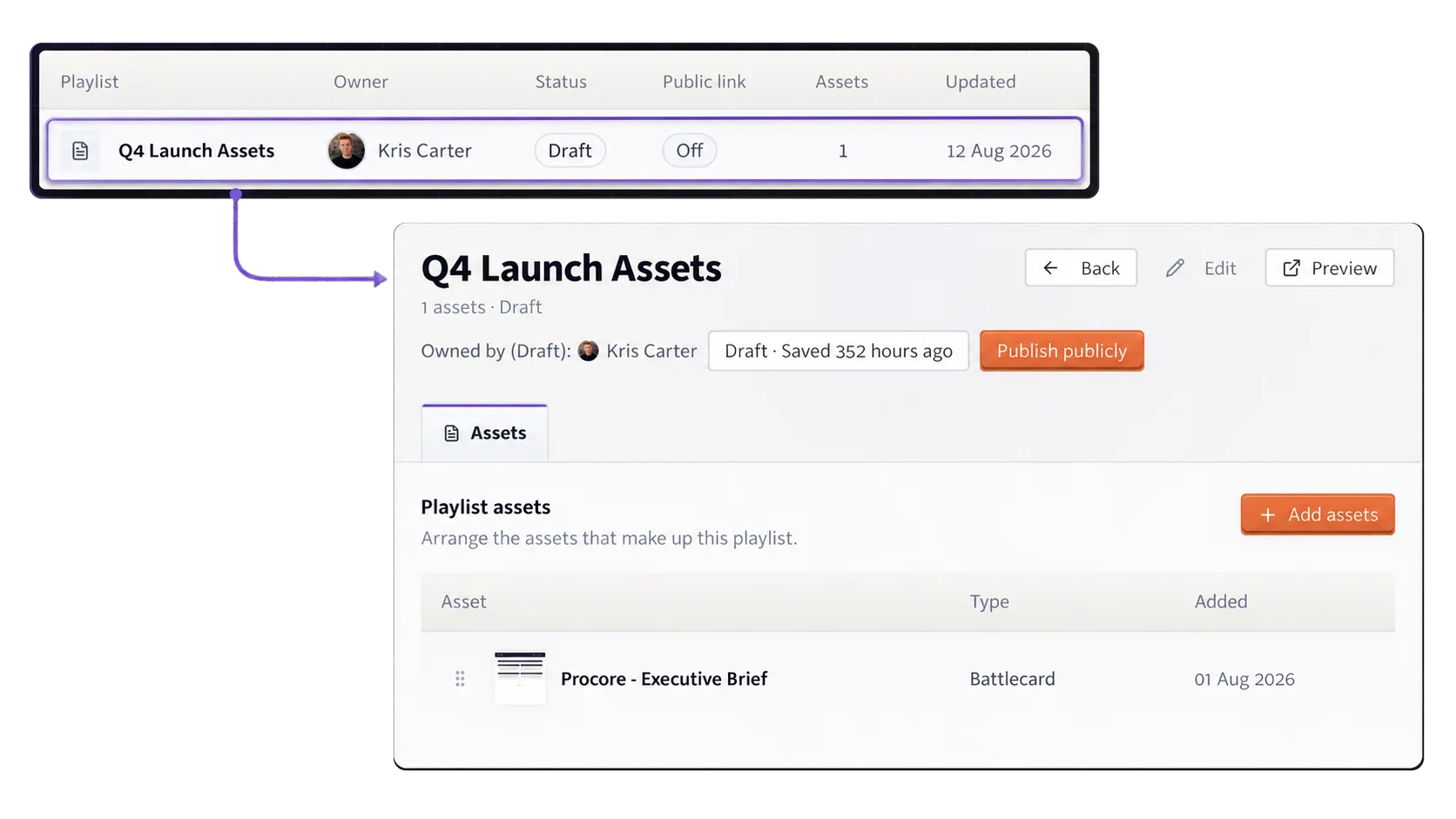
Reviewers check the guidance and request changes where needed. Once the content is ready, the team packages it into a seller playlist. The collection gives Sales a message and proof prepared for the launch, with owners responsible for maintaining the material.
The team has completed the work behind the sales pack, rather than leaving the recipient to settle the research and messaging questions while trying to use it.
Give enablement a finished answer
A strong handoff gives the receiving team more than a file. It gives them guidance for a defined audience, relevant proof and a person responsible for the content. Segment8 supports the records and approval work needed to prepare that answer.
Playlists let Product Marketing package approved guidance and exports into one collection. For a launch, that could bring together the message, competitive response and supporting material. The team can review the collection as a whole before making it available to sellers.
Segment8 also supports guidance in the product, email and connected working channels. Product Marketing can choose the audience while keeping editing and publishing rights with the people maintaining the content. The handoff has a clear output and a clear owner.
Read about sales guidance and delivery.
Keep the answer useful after approval
A new competitor claim or buyer concern can change an answer that was useful last month. The team needs a way to bring that finding back to the people responsible for the content. Segment8 keeps the evidence, records and owners available for that work.
Turn the finding into a clear assignment. Name the message or objection that needs attention and give the owner the relevant source. The owner can review related battlecards, personas and launch material, prepare the response and bring it through approval.
This makes maintenance part of the same process used to create the guidance. Product Marketing can keep the answer current while Sales continues to receive approved material. The team has a place to explain what changed and how it is responding.
Give the writer a brief they can work from
Before asking someone to prepare guidance, make the task clear. Which buyer question should it answer? Which product is involved? What should the seller be able to explain after reading it? What evidence does the owner need to check?
Segment8's assignments let the team put an instruction and due date against a named owner. The related research and product marketing records supply the material for the response. A clear brief helps the owner spend time on the answer instead of first working out what the request means.
For example, a request for a new battlecard could identify the objection buyers raise, the competitor offer involved and the proof that needs review. The owner can prepare that response while colleagues contribute product knowledge. The review then has a clear question to answer: is this guidance ready for the intended selling situation?
Let people contribute without losing the owner
Several people may have a useful part in preparing sales content. Product Marketing knows the message. A product specialist can help check a capability claim. A manager or another reviewer can assess whether the guidance is ready. Sellers need to use the result.
Segment8 keeps those jobs separate. The owner remains responsible for the content. Collaborators help prepare it. Approvers make the review decision. The seller audience gets the approved guidance. Access to the answer does not automatically give someone the right to edit or publish it.
This lets Product Marketing involve the people it needs while keeping responsibility clear. The owner can coordinate the response, reviewers can see what they need to decide and the receiving team knows which guidance it should use. As the business adds products and launches, the same working model can support the new content without creating a different set of unwritten rules for every project.
See the work behind your sales content in one demo
Bring a product message that needs improvement. Follow the evidence into positioning, persona work and a battlecard. Assign the response, open the approval view and inspect the final seller collection.
That shows the value of Segment8 for the work that happens before content is distributed. Your team can coordinate research, message development, launch preparation and approval in the same platform that holds the finished guidance.
Request a Highspot alternative demo around the message your business needs to create, approve and put in front of Sales next.
Highspot alternative FAQs
Yes. Segment8 supports the research, positioning, messaging, personas, battlecards and launch work behind sales guidance. Owners prepare the response and reviewers check it. The team can then package and share the approved content with the intended sellers.
No. Seller audiences provide access to the guidance. Ownership, collaboration and publishing rights belong to the people maintaining the content. The team can make an answer available to Sales while keeping responsibility for changes clear.
Yes. Segment8 connects launch audiences, messages, owners, dates and assets. Product Marketing can prepare the related battlecards and guidance, get them reviewed and put approved material and exports into a playlist for the launch's seller audience.
You can see the content version, reviewers, progress and next responsibility. Reviewers can approve or request changes with notes. The history keeps the decisions and handoffs, and Segment8 shows when content has changed since approval.
It includes deciding what to say, finding the proof and preparing the content before sellers receive it. Segment8 connects research, messaging, personas, battlecards, launch work and approval. The team can give enablement a checked answer for a clear audience.
A message prepared for a defined audience, with relevant proof and an owner responsible for it. Segment8 playlists can bring approved guidance and exports together as a seller collection. The receiving team gets material prepared for use rather than unfinished research to interpret.
It helps Product Marketing understand the concerns and proof that mattered to buyers. The team can compare direct responses with deals and market evidence, then revise the message, persona or battlecard. Segment8 keeps the evidence and the content work together.
Segment8 supports seller audiences for its product marketing work. Prepare the content for the product and buying situation, then choose who should receive it. Audience access stays separate from the rights needed to edit, approve or publish the guidance.
Bring a message that needs a real change. Check the source, identify the owner and reviewers, and follow the content through approval. Then open the final seller view. That shows who does the work and how the approved answer becomes available.
A new finding can become an assignment with an owner, instruction and due date. The owner reviews the affected content and prepares the update. Approval rules can require another review after edits, keeping the new answer connected to a clear decision.