FOR IMMEDIATE RELEASE
New capability unlocks deal outcome data from Salesforce and HubSpot and connects it to competitive strategy
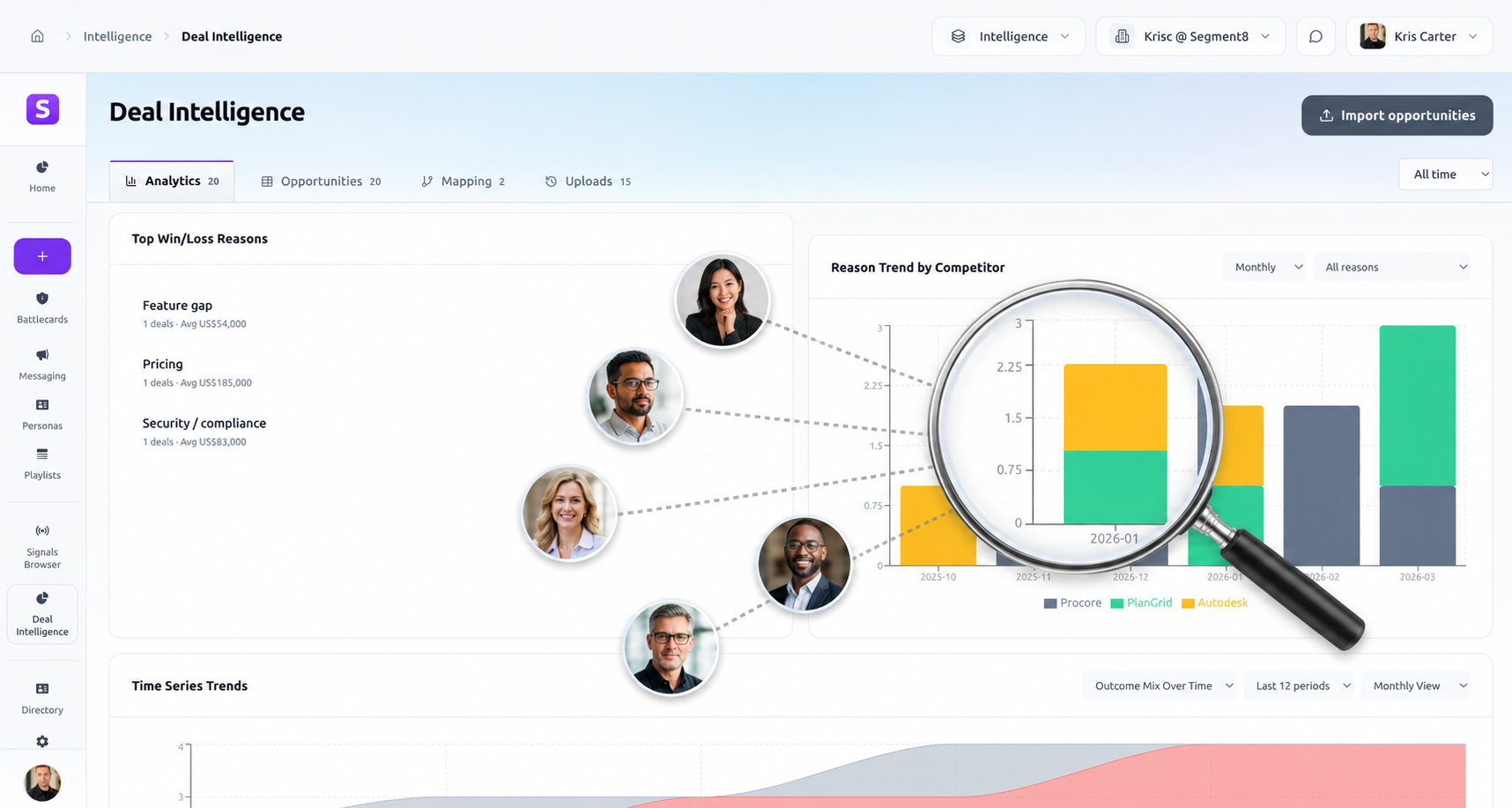
- Segment8 launches Deal Intelligence, a CRM opportunity analysis capability that allows revenue teams to import deal outcome data, normalise competitor names, and produce win-rate analytics without requiring a Salesforce admin or custom RevOps reporting.
- CRM data remains one of the most underused sources of competitive intelligence in B2B organisations. Win rates, loss reasons, and deal outcome trends exist inside Salesforce and HubSpot, yet often fail to reach the product marketing team that needs to act on them.
- Deal Intelligence completes the quantitative data layer in the Segment8 GTM Intelligence Platform, connecting structured deal outcomes to the competitive workspace where strategy decisions happen.
- The module gives PMMs and revenue leaders a faster way to understand where competitive pressure is rising, which competitors are affecting revenue, and where sales enablement needs to change.
MANCHESTER, UK, March 10, 2026 — Segment8, the GTM Intelligence Platform for revenue teams competing in active markets, today announced the launch of Deal Intelligence, a CRM opportunity analysis capability that allows revenue teams to import deal outcome data, normalise competitor names across CRM records, and produce win-rate, trend, and deal-size analytics without requiring a Salesforce admin or custom RevOps report.
CRM data about won and lost deals is among the most underused sources of competitive intelligence in B2B organisations. The stakes have risen. Revenue leaders face pressure to show that competitive strategy is producing measurable outcomes, while boards and investors expect clearer links between marketing, product investment, and pipeline performance.
The data needed to answer those questions often already exists. It sits inside a CRM built for opportunity management, where it helps teams track pipeline but rarely supports market intelligence. A PMM who wants to know the win rate against a specific competitor at deals above a certain size usually needs a custom CRM report, a RevOps analyst, and several days to get the answer.
That delay has a commercial cost. Competitive strategy keeps moving without the evidence that should shape it. Sales enablement gets updated from anecdote. Positioning changes in response to the loudest loss. Product feedback depends on whichever deal received the most attention. The CRM contains a clearer pattern, but the people responsible for translating that pattern into market response cannot access it without starting another reporting project.
Segment8 Deal Intelligence introduces a guided CSV import capability that accepts opportunity data from Salesforce, HubSpot, or any CRM export. A field-mapping flow handles the structural variation across different CRM configurations, so teams can work with the data they already have rather than reconfiguring their CRM before analysis can begin.
A competitor alias system maps raw CRM competitor name strings to verified competitor records in the workspace. If a CRM contains variations such as “Competitor A”, “Comp A”, “competitor-a”, or regional naming differences, Segment8 allows those aliases to be mapped once and applied automatically on future imports. This gives teams cleaner competitive reporting without manual spreadsheet clean-up each time they want to analyse deal outcomes.
Analytics across win and loss trends, win rate by competitor, deal count, outcome distribution, and deal-size segmentation are available from the moment data is imported. Product marketing teams can see which competitors are appearing most often, where win rates are weakening, which deal sizes are most exposed, and whether particular competitors are creating pressure in specific parts of the market.
"I have been in the room when a CRO asks 'why are we losing to this competitor?' and nobody can answer it with data," said Kris Carter, Founder of Segment8. "The data is there, in Salesforce, in HubSpot, in the CRM the ops team maintains. But it rarely connects to the competitive intelligence workspace, and producing the analysis becomes a project that nobody has time to run. I've seen this at Procore, where competitive dynamics in the UK market were shifting quarter by quarter. I've seen it in financial crime technology, where a single competitor move could reframe an entire RFP. The intelligence to respond existed in the data. Deal Intelligence is what makes it accessible."
Deal Intelligence is designed as the quantitative data layer that complements the qualitative win-loss intelligence already in the Segment8 platform. Opportunity data imported through Deal Intelligence connects directly to the win-loss workspace, linking structured outcomes across a portfolio of deals to the interview findings and field evidence that explain why individual deals went the way they did.
This combination gives revenue teams a more complete view of competitive performance. Deal Intelligence can show that win rates are falling against a specific competitor in mid-market opportunities. Win-loss intelligence can explain whether the cause is pricing pressure, missing product capability, weaker executive alignment, procurement friction, or a positioning gap. Battlecards can then translate that insight into updated field guidance.
For PMMs, the value is practical. Instead of relying on anecdotal feedback, scattered CRM exports, or one-off requests to RevOps, they can access the competitive outcome data needed to shape messaging, objection handling, sales plays, and product feedback. Competitive strategy becomes easier to prioritise because the impact on deals becomes visible.
For sales leaders, Deal Intelligence creates a clearer connection between competitive activity and revenue outcomes. Teams can see where competitors are entering the pipeline, where they are causing losses, and where enablement may need to change. This supports sharper inspection of pipeline risk and a more grounded view of where the field needs help.
For founders and revenue operators, the module offers a simpler path to strategic visibility. Instead of waiting for custom reporting cycles, teams can import opportunity data and quickly identify the competitive patterns that deserve attention.
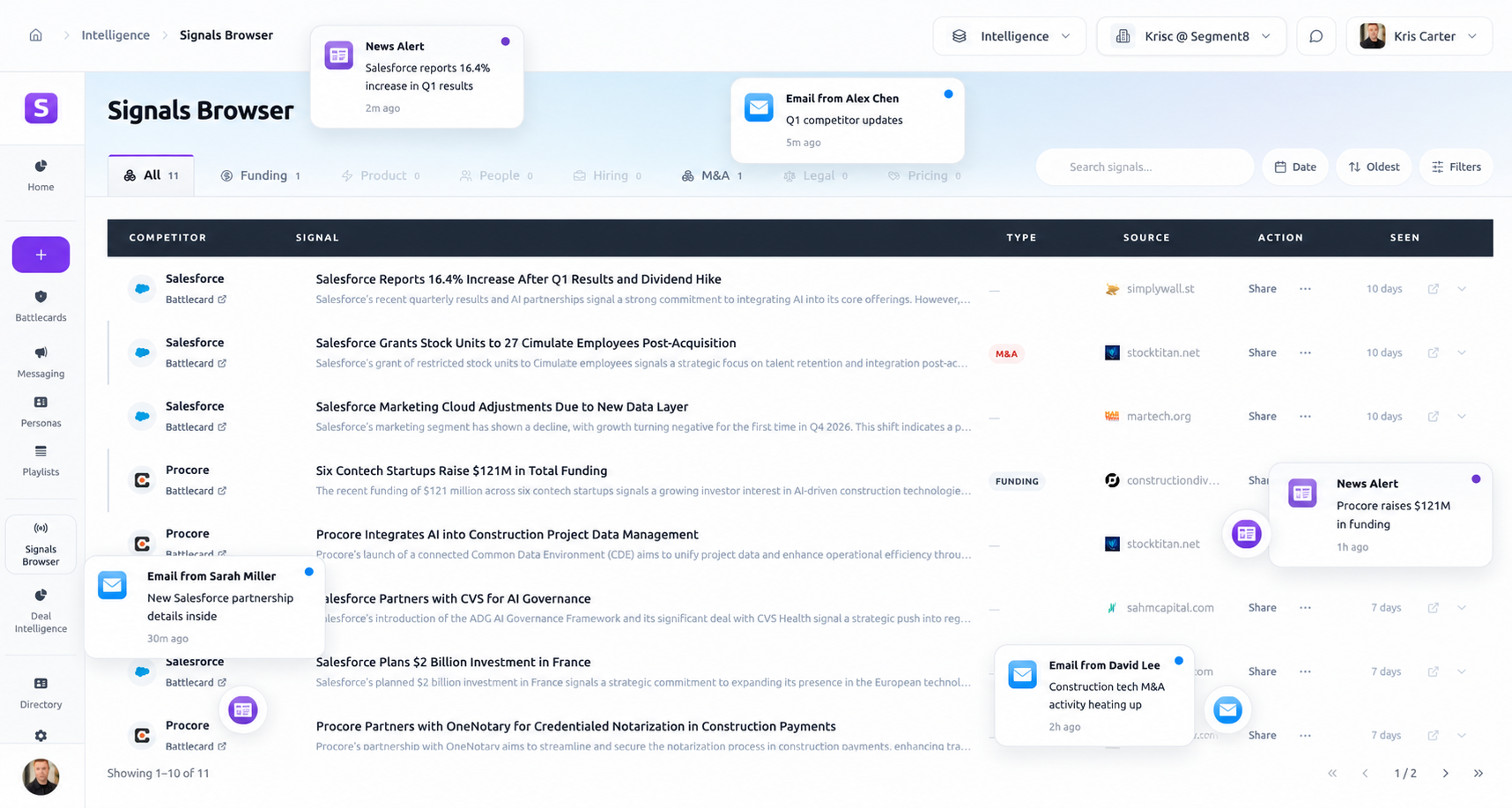
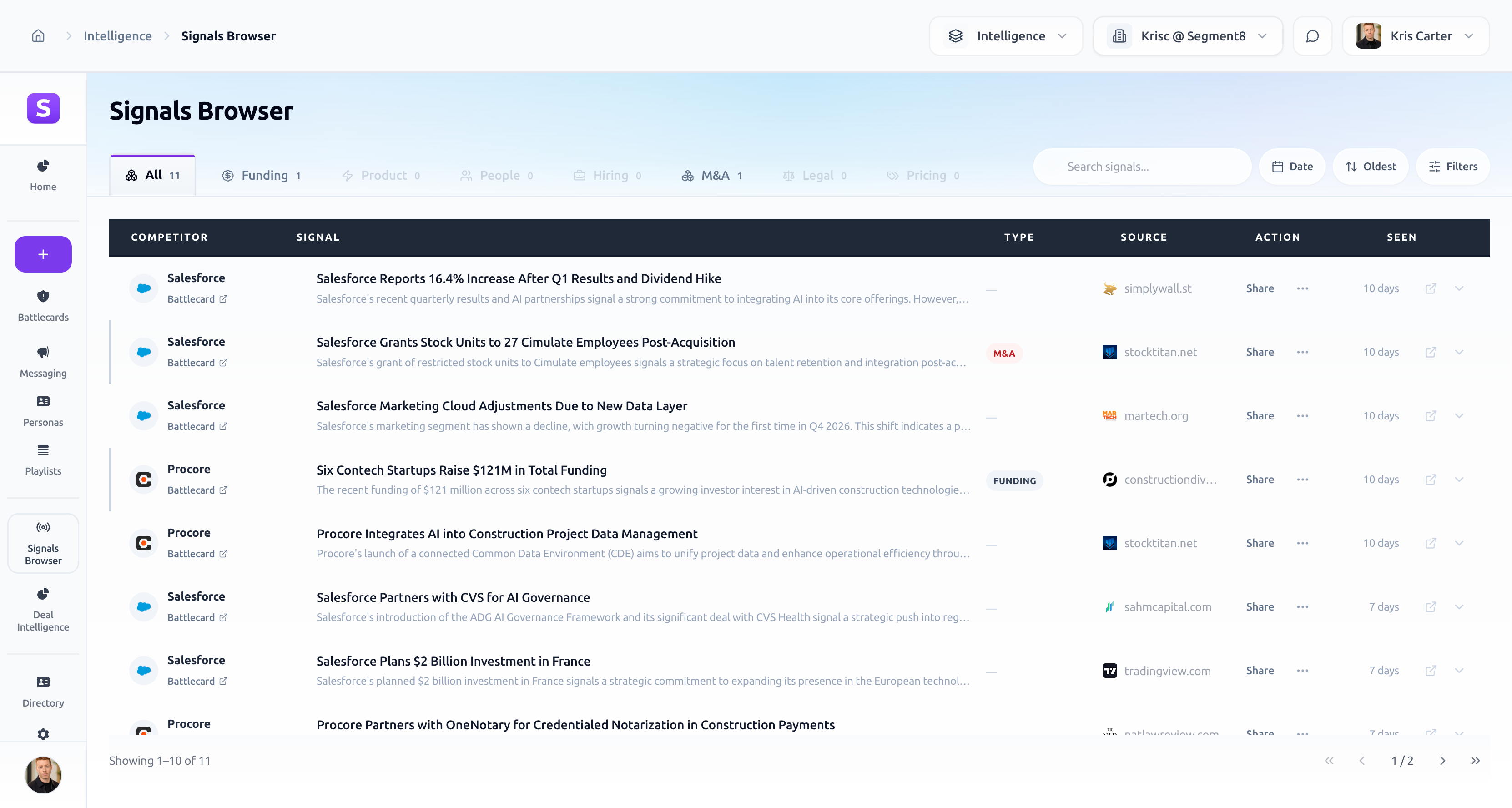
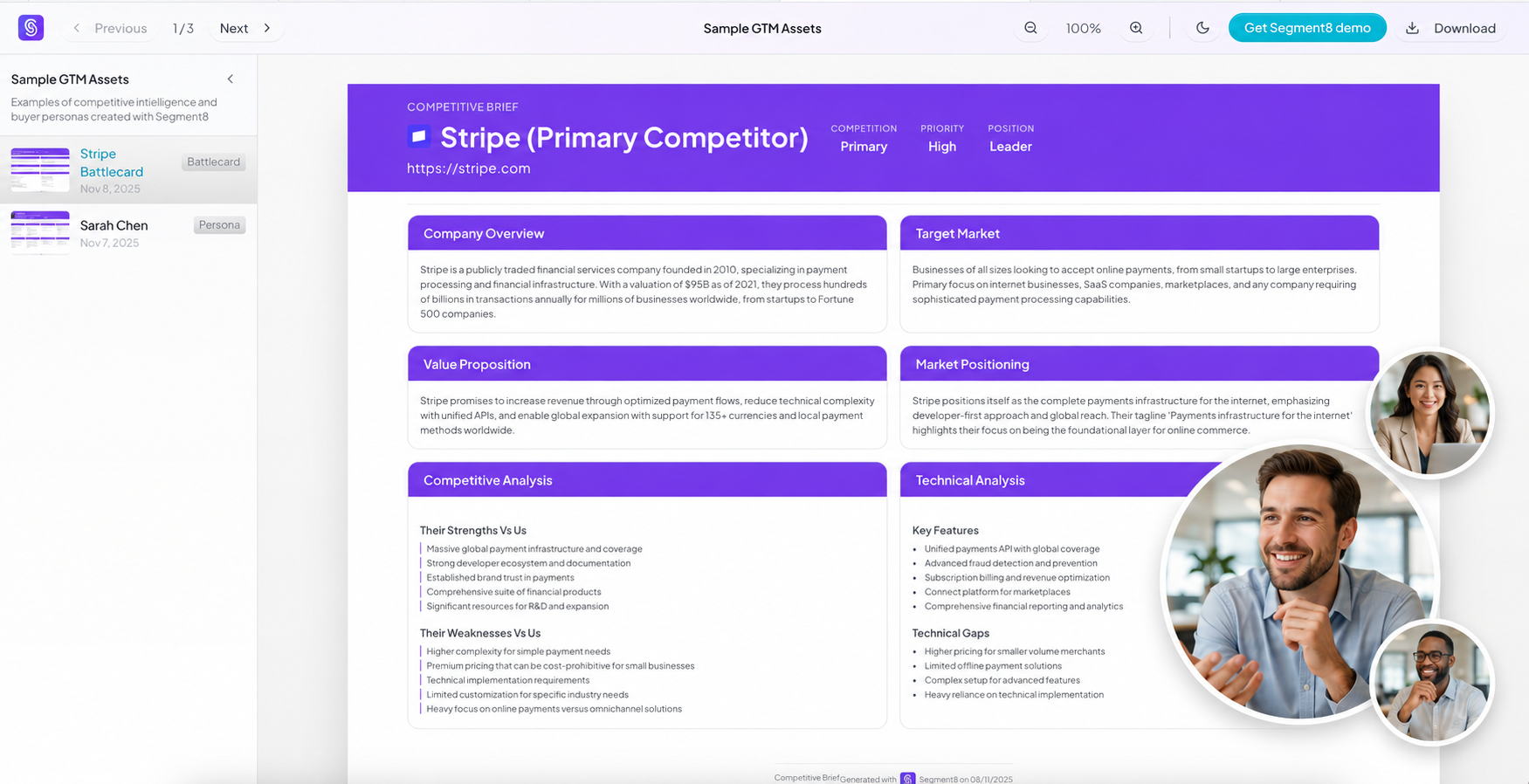
The launch extends Segment8’s GTM Intelligence Platform beyond market monitoring and battlecard creation into measurable deal performance. Market Signals show what competitors are doing. Battlecards translate that movement into field guidance. Deal Intelligence shows where competitive dynamics are affecting revenue.
Together, these capabilities help revenue teams move from reactive competitive enablement to a clearer operating model: see what changed in the market, understand how it affects deals, and update the field before the next competitive conversation.
"Competitive strategy needs evidence," Carter added. "Anecdotes matter, but they should not carry the whole operating model. Deal data gives teams the pattern. Win-loss research gives them the reason. Battlecards give the field the response. Deal Intelligence brings that chain into one workspace."
Deal Intelligence is available to Segment8 subscribers as part of the GTM Intelligence Platform.
Revenue teams can request a demo at segment8.com/demo.
About Segment8
Segment8 is the GTM Intelligence Platform for revenue teams competing in active markets. It connects market signals, win-loss intelligence, and field enablement in one platform so market intelligence reaches sellers before the deal is decided. Based in Manchester, UK.
Media contact
Kris Carter
Founder, Segment8
[email protected]