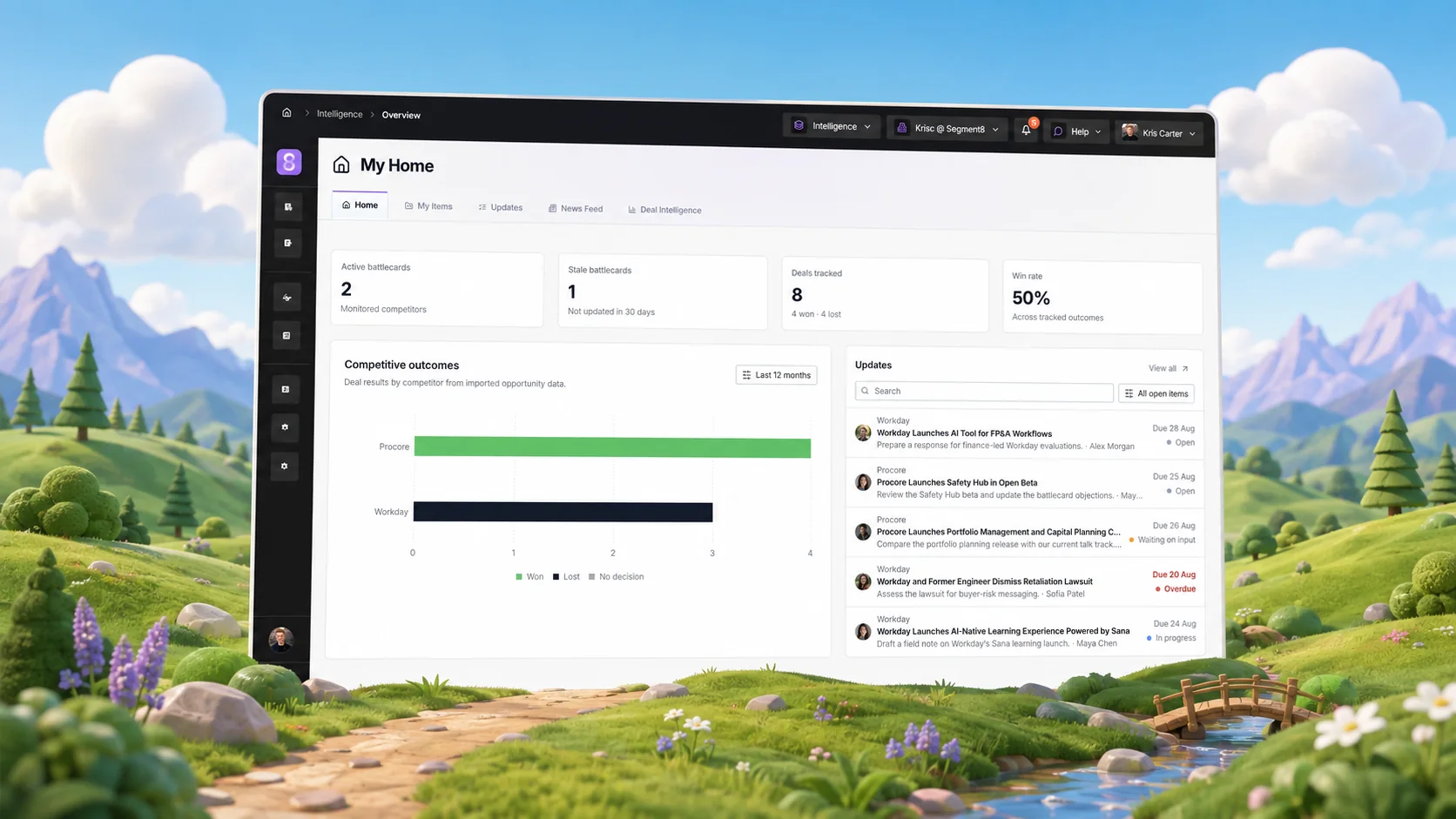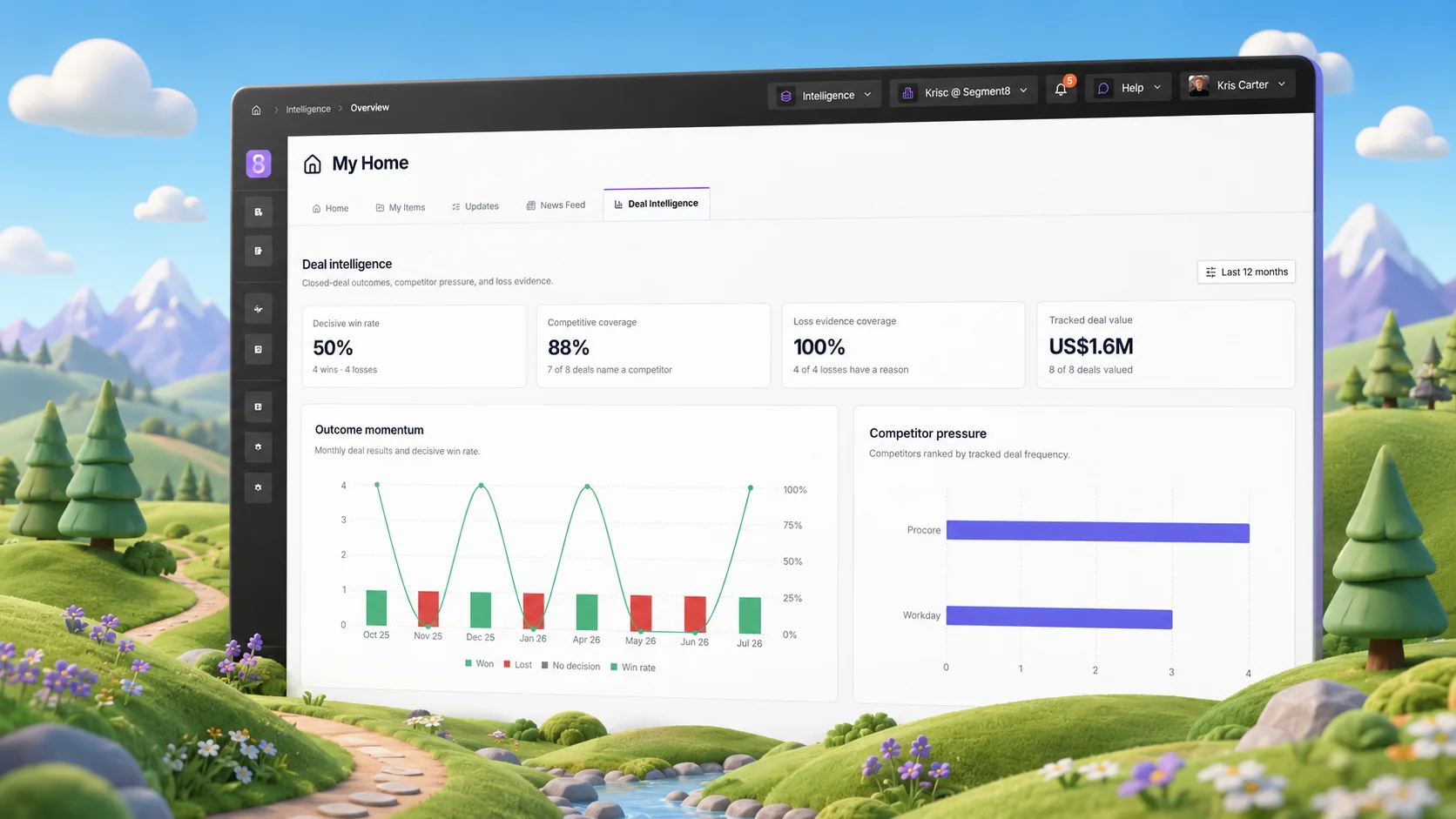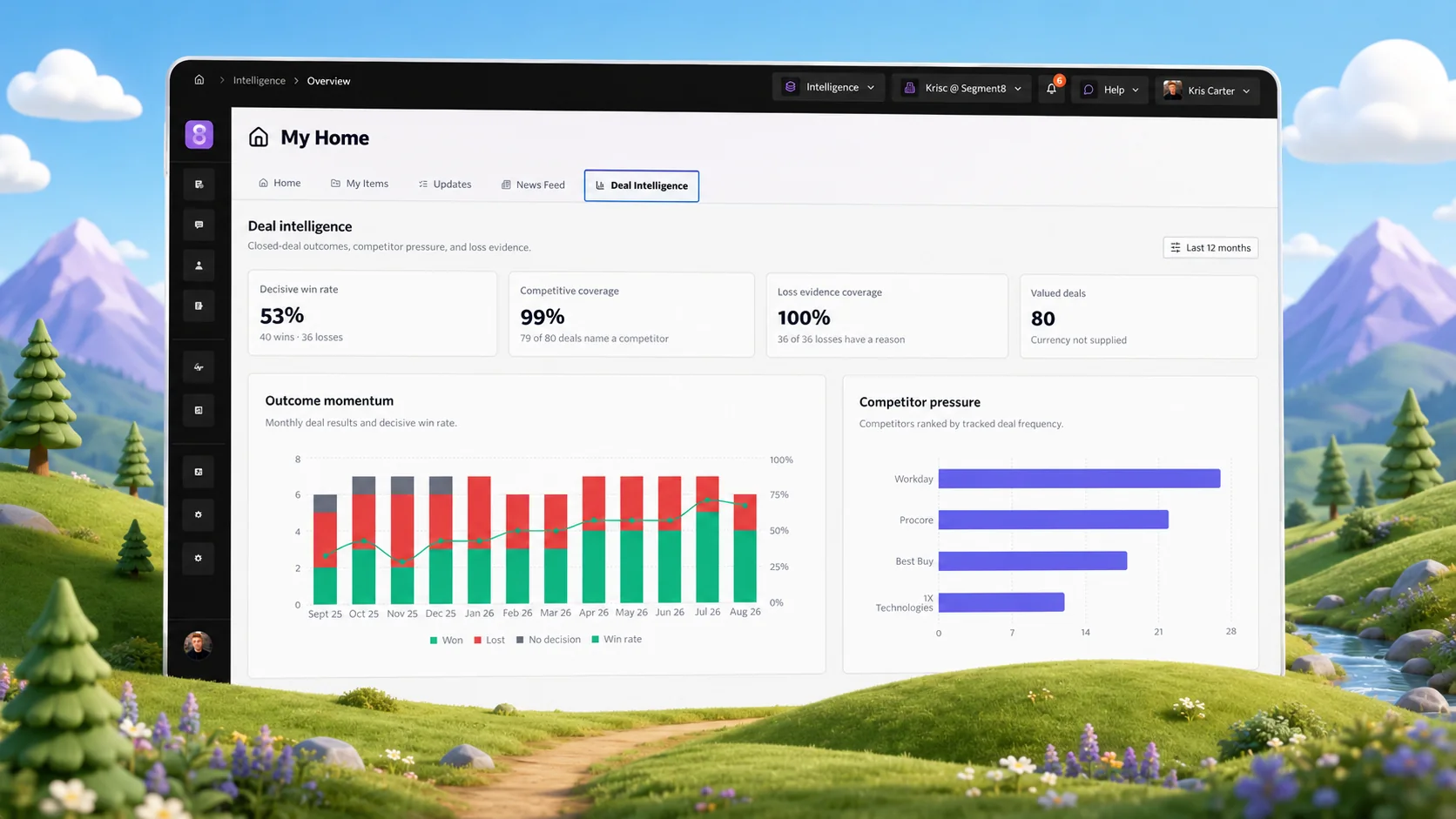
Most sales enablement programs create a lot of content and move very few deals. The gap is not effort — it is alignment between what gets built and what reps reach for when the deal is actually in motion.
This guide covers the content types that demonstrate measurable deal impact, how to audit what you already have against those standards, the distribution channels that actually reach reps, and the metrics that connect enablement investment to revenue outcomes leadership will fund.
Content reps actually use
The most useful research question in sales enablement is not "what content have we built?" — it is "what do reps reach for when they are preparing for a competitive call?" The answer is almost always: something short, something accurate, and something they can find in under two minutes.
The content types with the highest organic adoption share three properties: they are built for a specific selling moment (not general reference), they contain information reps cannot easily construct themselves (competitive intelligence, proof points, objection handling), and they are accessible through the channels reps already use.
The content types reps consistently abandon: anything longer than two pages without a summary, anything that requires navigating to a separate tool to access, anything that has not been updated in the last quarter, and anything that was built for a product manager's understanding of the market rather than a rep's conversation with a buyer.
Content types ranked by deal impact
1. Competitive battlecards
The highest-leverage content type in competitive markets. A battlecard in the right format, kept current, and distributed at the right moment has a direct and measurable effect on win rates in competitive deals. The format that drives adoption: one page, four sections (competitor snapshot, their strengths honest, your advantages with proof, top objection handlers). See the full battlecard guide for build steps and format options.
2. Customer proof points and case studies
The content type with the highest influence on late-stage deals. Buyers do not believe your claims — they believe other buyers like them. The most useful format is a one-paragraph proof point (company type, the problem, the outcome with a number) that can be dropped into an email or spoken in a call, not a four-page PDF that requires the buyer to request it and read it on their own time. Build a proof point library indexed by industry, company size, use case, and competitor displaced.
3. Objection handling guides
Source objections from call recordings, not assumptions. The objections that actually kill deals are often different from the ones product marketing anticipates. Mine call recordings for the exact language buyers use, not the clean category you would put them in. The acknowledge-reframe-evidence format produces the best results: validate the concern, shift the frame to where you win, close with a proof point.
4. Discovery question frameworks
Used by the best reps and ignored by everyone else, which tells you something about distribution. Discovery frameworks work when they are built around the specific buying triggers and evaluation criteria for your product — not generic "SPIN selling" templates. The most effective format is a one-page card organised by buyer persona and deal stage, not a comprehensive question bank.
5. Pricing and packaging one-pagers
Critical in mid-market and upmarket deals where pricing complexity creates friction. The goal is not to replace the pricing conversation — it is to give reps a leave-behind that frames the value exchange accurately. Keep it to one page. If your pricing requires more than one page to explain, the problem is not the document.
6. ROI calculators
High impact in enterprise deals where the economic buyer needs to justify the investment to finance. Low impact in SMB deals where the decision-maker and economic buyer are the same person and the number is small enough to decide without a model. Build them for the deals where they matter, not as a default asset for every market segment.
| High-impact enablement | Low-impact enablement |
|---|---|
| Short, specific, built for a single selling moment. Distributed through channels reps already use. Updated on a cadence that keeps pace with the market. | Comprehensive, generic, built for a library nobody navigates. Announced in a launch Slack message. Last updated when it was created. |
Content audit framework
Before building new content, audit what exists. Most enablement programs have more content than they think — and less that is actually usable. Score each asset on four dimensions: accuracy (is the competitive information still correct?), recency (updated in the last 90 days?), format (right length and structure for the selling moment?), and distribution (accessible through the channels reps use?).
Assets that score poorly on accuracy or recency should be archived immediately. An outdated battlecard that reps encounter before a competitive deal does more damage than no battlecard at all — it builds false confidence against a competitor that may have moved significantly since the card was written.
Naming conventions compound over time. A consistent system — CompanyName_ContentType_Competitor_YYYY-MM — makes content discoverable without a search engine. Inconsistent naming is one of the primary reasons enablement libraries fail: reps cannot find what they need in under two minutes, so they stop looking.
The question is not how much content you have. It is how much of it a rep would trust in front of a buyer today.
Distribution channels
Slack
The highest-adoption distribution channel for competitive content when done correctly. Push the battlecard for a specific competitor when that competitor is tagged on a deal — not a general weekly digest of competitive updates. Contextual relevance at the moment of need drives adoption. A Slack channel called #competitive-intel with no push logic drives almost none.
CRM sidebar
CRM delivery can reduce retrieval work by placing guidance beside an active opportunity. It requires a working integration, reliable deal fields and clear rules for which content appears. Measure whether sellers use it rather than assuming proximity produces adoption.
Centralised wiki (Highspot, Seismic, Guru, Notion)
Useful for passive reference and onboarding. Not effective as a primary distribution channel because it requires reps to navigate to the platform and search for the content they need. Works when it integrates into the rep's existing workflow. Fails when it is a standalone destination that reps must be trained to use.
Pre-call briefs and deal alerts
Pre-call briefs can combine competitive context, buyer history and proof points before a scheduled conversation. They require reliable source data and careful scoping. Treat their effect as a hypothesis to test, not an automatic improvement in seller performance.
Measuring ROI
The enablement dashboard
Track eight metrics from the start to establish a baseline before any program changes: win rate by competitor (the primary output metric), battlecard adoption rate (percentage of reps accessing content for each competitor), content freshness score (percentage of assets updated in the last 90 days), competitive deal velocity (average days to close in competitive vs. non-competitive deals), rep confidence score (self-reported, quarterly survey), revenue from competitive wins, competitive displacement rate, and unanswered search queries (what reps are searching for in your content library that returns no results — a direct gap map).
Battlecard ROI calculation
A useful starting formula is: attributable change in competitive wins × average deal value, minus the cost of the programme. State how attribution was estimated, show the cohort and timeframe, and separate correlation from causation. Content volume is an input, not a revenue result.
Attribution challenges
Correlation is not causation, and reps who use battlecards may also be your better reps — which means some of the win rate improvement would have happened anyway. Be honest about this with leadership rather than overselling the attribution. A controlled pilot — tracking win rates for a cohort that received updated enablement versus a control cohort that did not — produces more defensible attribution than program-wide before/after comparisons. Run the pilot, then present the data.
Common mistakes
Building for the creator's frame, not the rep's workflow. Enablement built around how product marketing thinks about the competitive landscape is comprehensive but not usable. Build around the specific moment in a deal when a rep needs the information — and the format they can use in that moment.
Announcing rather than distributing. A Slack message that says "new battlecards are live in the drive" is an announcement. Distribution is a system that puts the card in front of the rep at the moment they need it. The distinction determines adoption more than content quality.
No baseline before launching. If you do not measure win rates, adoption, and deal velocity before a program change, you cannot demonstrate impact after. Set 30-day baselines on the metrics that matter before any significant enablement investment.
Skipping rep validation. Content built without field input will have the right sections and the wrong answers. Run a two-week pilot with five to eight reps before full rollout. Ask three questions: Is this accurate? Are these the right objections? Would you use this in a deal? The answers will change what ships.
Measuring inputs, not outputs. Volume metrics — content created, updates shipped, Slack messages sent — tell you about activity, not impact. Connect enablement investment to deal outcomes from the beginning. The programs that sustain funding are the ones that can demonstrate a causal chain from a battlecard update to a closed deal.
Questions answered
How often should competitive battlecards be updated?
Set a review cadence based on how quickly the subject changes, then review sooner when pricing, product, positioning or field evidence changes. Track the time between material evidence and an approved update, but do not treat age alone as proof that content is wrong.
Should SDRs and AEs have different content?
Yes. SDR content should be built for 15-minute conversations where the goal is to qualify interest and handle surface-level competitive objections. Concise competitor one-pagers, talk tracks, and objection handlers for the three most common early-stage rejections. AE content goes deeper — full battlecards, pricing comparison frameworks, technical differentiation guides, and ROI calculators for late-stage conversations. Giving AEs SDR content leaves deal-closing capability on the table. Giving SDRs AE content creates cognitive overload before the relationship is even established.
How do we keep content fresh without a dedicated team?
Give every asset an owner, a review date and explicit triggers for earlier review. Monitoring can surface relevant changes, but someone still needs to decide whether the evidence changes the guidance. Record that decision so freshness reflects review rather than automatic rewriting.
Where should sales content live?
Wherever reps already are, not wherever you want to store it. If your team lives in Salesforce, content needs to be accessible from Salesforce. If they live in Slack, the highest-impact distribution is a Slack push at the right moment. Centralised repositories (Highspot, Seismic, Guru) work when they integrate into the rep's existing workflow — not when they require reps to navigate to a separate tool to find content they already do not have time to look for.
How do we drive adoption for new content we ship?
Treat adoption as something to measure. Test the delivery channel, ask sellers whether the guidance answered the deal question and track repeat use. Source visibility, review dates and field participation can improve trust, but none guarantees that the content will be used.
How do we get buy-in from sales leadership to invest in enablement?
Connect enablement output to deal outcomes, not content volume. Define a cohort, record which guidance was available and used, and compare competitive outcomes over a stated timeframe. Report selection bias and sample size. A small, measured pilot is more credible than claiming every later win came from the content.
What is the most common reason enablement programs fail?
Content is built for the creator's organisation, not the rep's workflow. PMM creates battlecards that reflect what they know about competitors. Sales creates call scripts that reflect how they sell. Neither accounts for the 90-second window before a discovery call or the three competing priorities pulling at a rep's attention. Build content in the format and at the level of detail that works for the rep in their actual selling motion — which means interviewing reps before building, not after.